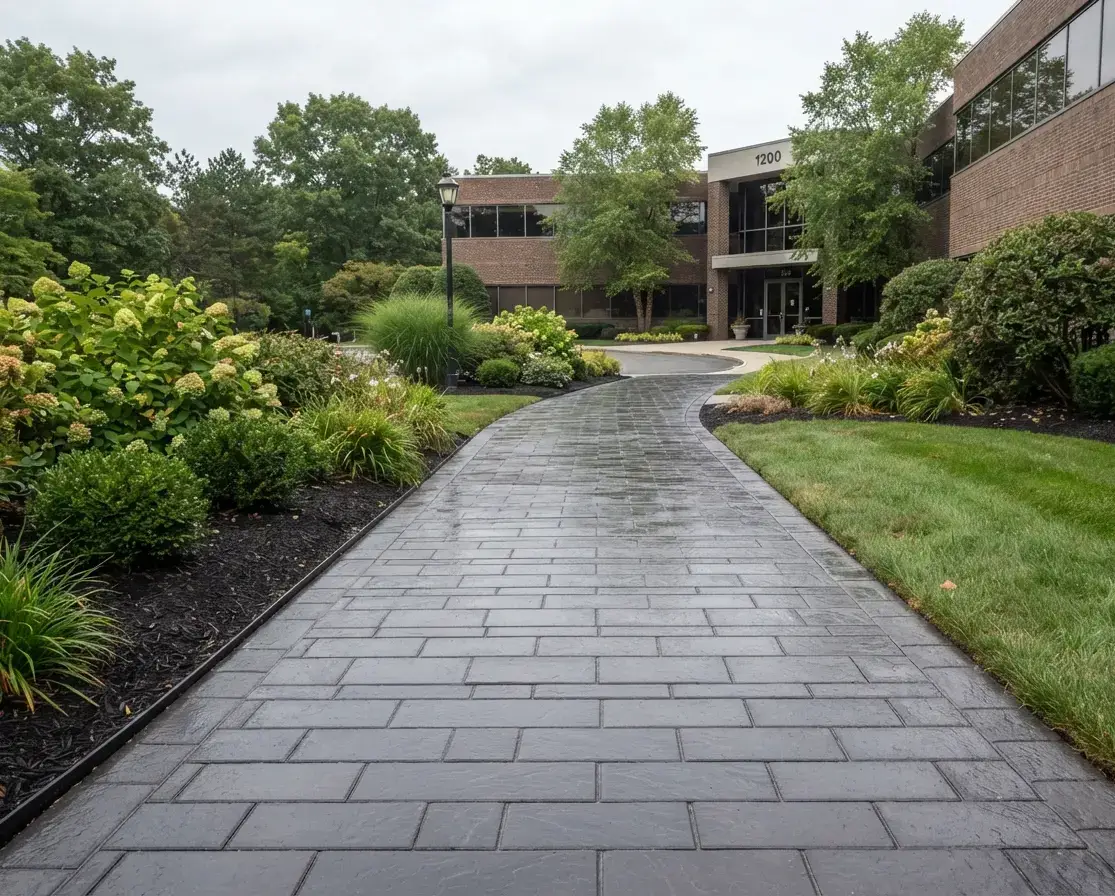

Most Long Island property managers view the “white film” on their walkways as a seasonal eyesore, it actually represents a significant legal and financial vulnerability. In the first quarter of the year, the combination of accumulated salt brine and organic residue creates a high-slip environment that standard snow removal cannot address, leaving your organization exposed to preventable premises liability claims.
The Friction Factor: Quantifying the Slip-and-Fall Risk
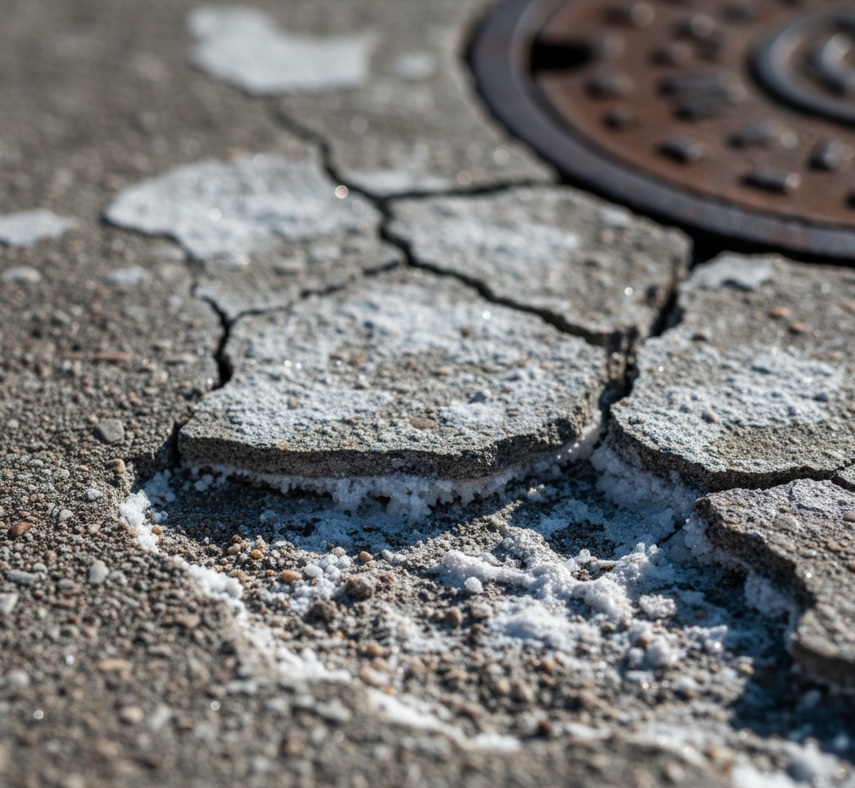
The primary danger during February isn’t just the ice you can see; it’s the microscopic reduction in friction caused by “salt-slick” surfaces. When road salt and calcium chloride mix with light precipitation, they create a slippery translucent film.
According to the National Floor Safety Institute (NFSI), slip-and-fall accidents are the leading cause of workers’ compensation claims and the primary cause of occupational injury for people aged 55 and older. In the New York legal landscape, “constructive notice” is a high bar; if a hazard like salt-induced slickness has existed long enough for a manager to have discovered it, the property owner is often held liable for resulting injuries.
Why It Matters: The Stakeholder Perspective
Neglecting the deep cleaning of walkways in Q1 carries different but equally severe risks depending on your specific role:
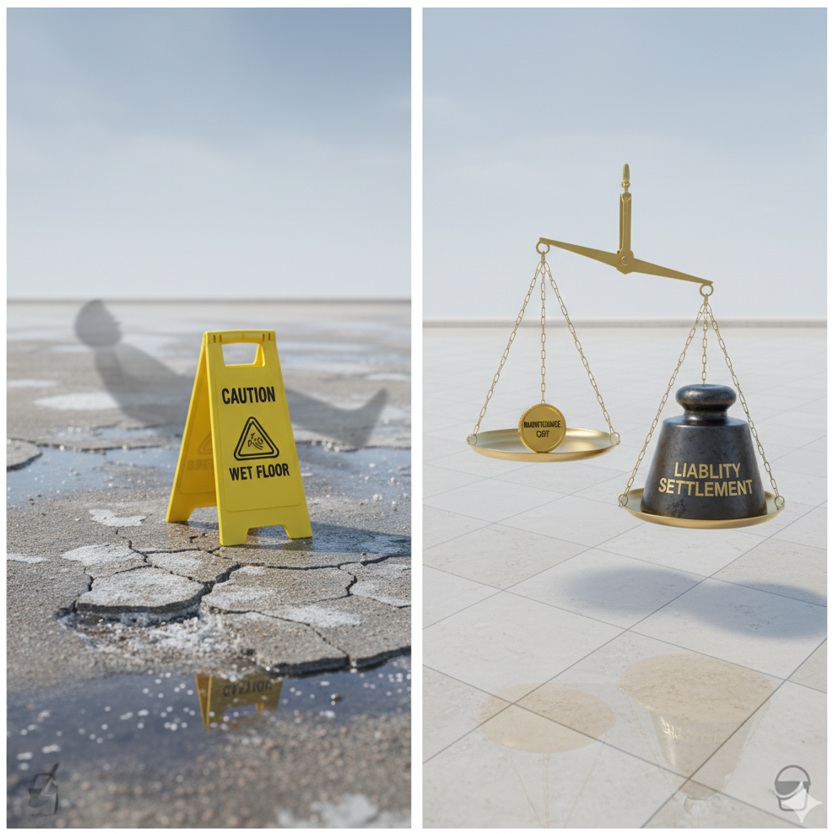
- For Commercial Property Managers: A single slip-and-fall lawsuit in New York can result in settlements ranging from $30,000 to over $250,000, depending on the severity of the injury. This far outweighs the nominal cost of a scheduled maintenance rinse to restore surface traction.
- For Healthcare Facility Administrators: Patient safety and “Grade A” accessibility are non-negotiable. Salt tracked into entryways doesn’t just create a slip hazard; it erodes interior flooring treatments, leading to secondary trip hazards like buckling carpets or warped tiles.
- For HOA Board Members: Beyond the legal risk, the “winter grime” aesthetic signals a lack of oversight. Maintaining pristine, high-traction common areas is essential for resident retention and upholding the community’s safety standards during the harshest months of the year.
The Strategy: Restoring Substrate Integrity
Standard power washing is often insufficient in February’s temperatures. Above All Pressure Cleaning utilizes a specialized Q1 strategy designed for the Long Island climate:
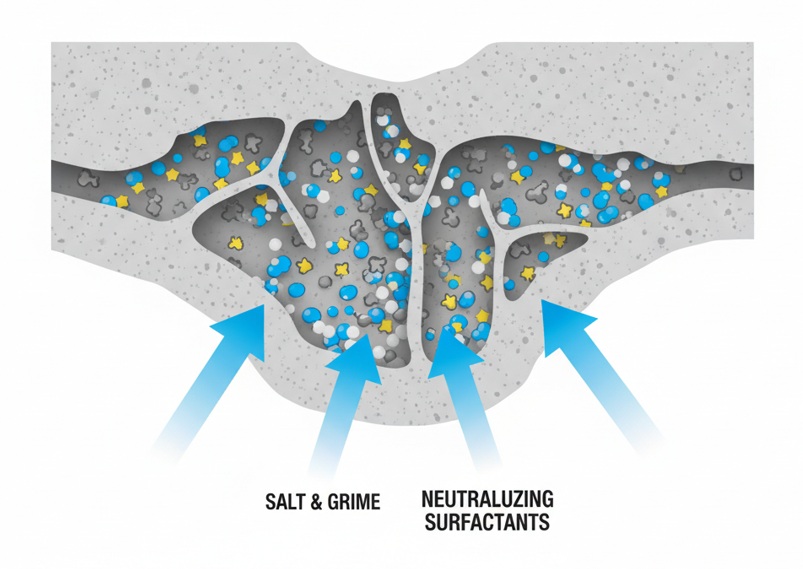
- Chemical Neutralization: We don’t just move the salt; we use professional-grade surfactants to break down the ionic bond of the brine, fully extracting it from the concrete pores.
- Traction Restoration: By removing the oily film left by ice-melt products, we restore the natural “Coefficient of Friction” to your stone and concrete surfaces.
- Preventative Auditing: We identify areas where “ponding” occurs—where water pools and refreezes—allowing you to address drainage issues before they become permanent liability hotspots.
Protect Your Bottom Line This Quarter
In the professional world of property management, “clean” is a byproduct of safety. By addressing winter buildup in February, you aren’t just improving curb appeal; you are implementing a documented risk-mitigation strategy that protects your tenants, your residents, and your insurance premiums.
Don’t let winter residue become a legal liability.
Contact Above All Pressure Cleaning for a Q1 safety assessment or learn more about our Commercial Pressure Washing Services to see how we maintain safety standards across Nassau and Suffolk Counties.
Yes, provided it is done by professionals using temperature-controlled equipment. We monitor the local Nassau and Suffolk weather closely to ensure our salt neutralization process is performed during safe “thaw windows.” Our goal isn’t just to rinse the surface but to chemically extract the brine before it can refreeze and cause structural spalling.
Waiting until spring is a high-risk financial strategy. By then, the salt has had months to penetrate the porous concrete, leading to surface “pitting” that can cost between $15 and $30 per square foot to repair. Furthermore, the “salt-slick” film present in February is a leading cause of Q1 slip-and-fall incidents, which can result in New York settlements averaging $15,000 to $45,000 for even minor injuries.
Standard power washing often uses cold water and high pressure, which can actually force salt deeper into the concrete pores. Our neutralization strategy uses specialized surfactants that break the ionic bond between the chloride and the substrate. This restores the natural friction of your walkways, significantly reducing your liability footprint.
Absolutely. In New York, HOA boards have a “duty of care” to maintain safe common areas. If a resident or visitor slips on a “salt-slick” surface that the board failed to treat, the association can be held liable under the “constructive notice” rule—meaning you should have reasonably known the hazard existed and taken steps to mitigate it.
A winter maintenance rinse is a risk-mitigation tool. While a summer clean is largely for aesthetics, a February wash is designed to protect your bottom line. It prevents the immediate depreciation of your concrete assets and provides a documented “paper trail” of safety maintenance that can be vital for insurance audits and liability defense.