Pollen, dust and bird mess quietly cut your panels output. We clean them the way the manufacturers specify deionized water, low pressure, no abrasives.
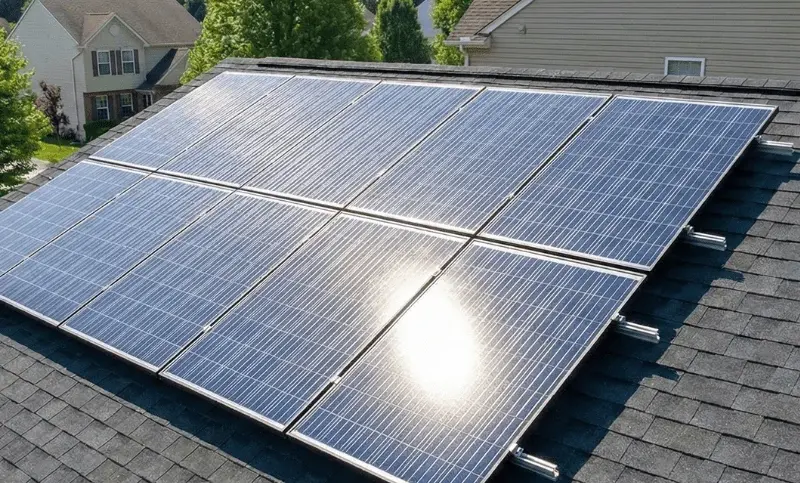
Solar panels are sold as maintenance-free, and mostly they are until you look at what settles on them.
Long Island coats them in three things. Spring pollen forms a sticky yellow film that rain smears rather than removes. Dust, pollen and general grime build a haze that never fully rinses off on its own. And birds particularly under trees or near the coast leave droppings that bake onto the glass.
Every bit of that blocks light. Studies of soiled residential arrays put the output loss anywhere from a few percent to well into double digits when buildup is heavy. A single shaded or fouled cell drags down the whole string it sits in, so a few bird droppings can cost more generation than their size suggests.
You paid for the panels to generate. A film you can barely see from the ground is generation youre not getting every sunny day, quietly, until theyre cleaned.
Solar glass has specific rules, and we follow them.
No harsh chemicals, no abrasives, no high pressure. Panel manufacturers are explicit: abrasive pads scratch the glass, harsh detergents leave residue that attracts more dirt, and high pressure can breach the seals around the cells. Any of the three can dent your output or your warranty.
We use purified, deionized water and soft washing. Deionized water lifts grime and then dries without leaving the mineral spots that ordinary tap water leaves behind spots that themselves block light. Soft brushes and low pressure handle the baked-on bird mess. The panels come back to clean glass, not a smeared film.
We work safely around the array and the roof. Panels are cleaned without walking on them where possible, and we protect the roof surface and any landscaping below.
For most Long Island homes, once or twice a year keeps output where it should be.
Typically after spring pollen and again in autumn for panels under or near trees, close to the coast, or anywhere birds are active.
For open, unshaded arrays in cleaner positions.
The easiest way to judge it is your own monitoring: if generation is drifting down on clear days, the glass is usually the reason.
If youd rather not think about it, our residential membership schedules it automatically at member rates, from $39 a month.
Most exterior damage were asked to fix was caused by cleaning. Knowing which surfaces take pressure and which need chemistry is the entire job.
Members of the Power Washers of North America an industry association with standards around method, insurance, and environmental practice. Very few Long Island companies hold it.
Landscaping pre-wet and covered, fixtures shielded, everything rinsed after. It takes longer. Its why we dont leave damage behind.
Founded in 2014 and still run by the person who started it. When something needs sorting, theres someone to call who can actually decide.
Over a decade on Long Island, reviewed by the people who live here.
Most homeowners combine these one mobilization, one visit, better pricing than booking separately.
Yes, when theyre dirty. Pollen film, dust haze and bird droppings all block light, and because one fouled cell drags down its whole string, even localized mess costs generation. Clean glass restores what the soiling was taking.
Not the way we do it. We follow manufacturer guidance deionized water, soft washing, no abrasives, no harsh chemicals and no high pressure. Those are exactly the things that scratch glass or breach seals, and we avoid all of them.
Tap water leaves mineral spots as it dries, and those spots themselves block light and attract dirt. Deionized water lifts grime and dries spot-free, so the panels stay cleaner longer.
Once or twice a year for most homes twice if theyre near trees, the coast, or active birds. Your monitoring app is the best guide: drifting output on clear days usually means the glass needs cleaning.
Wherever possible, yes. We clean from the edges and with the right reach equipment to avoid standing on the array, and we protect the roof surface throughout.
Often, and its more efficient one visit, one mobilization. The roof around an array grows the same algae film, so combining the two is common.
Tell us about your home and well come back within 24 hours.
We’ll be in touch within 24 hours. Urgent? Call 631-627-8888 — we answer around the clock.