
The white mineral haze and chalky buildup on brick, stone and pavers lifted with the right chemistry and advice on stopping it coming back.
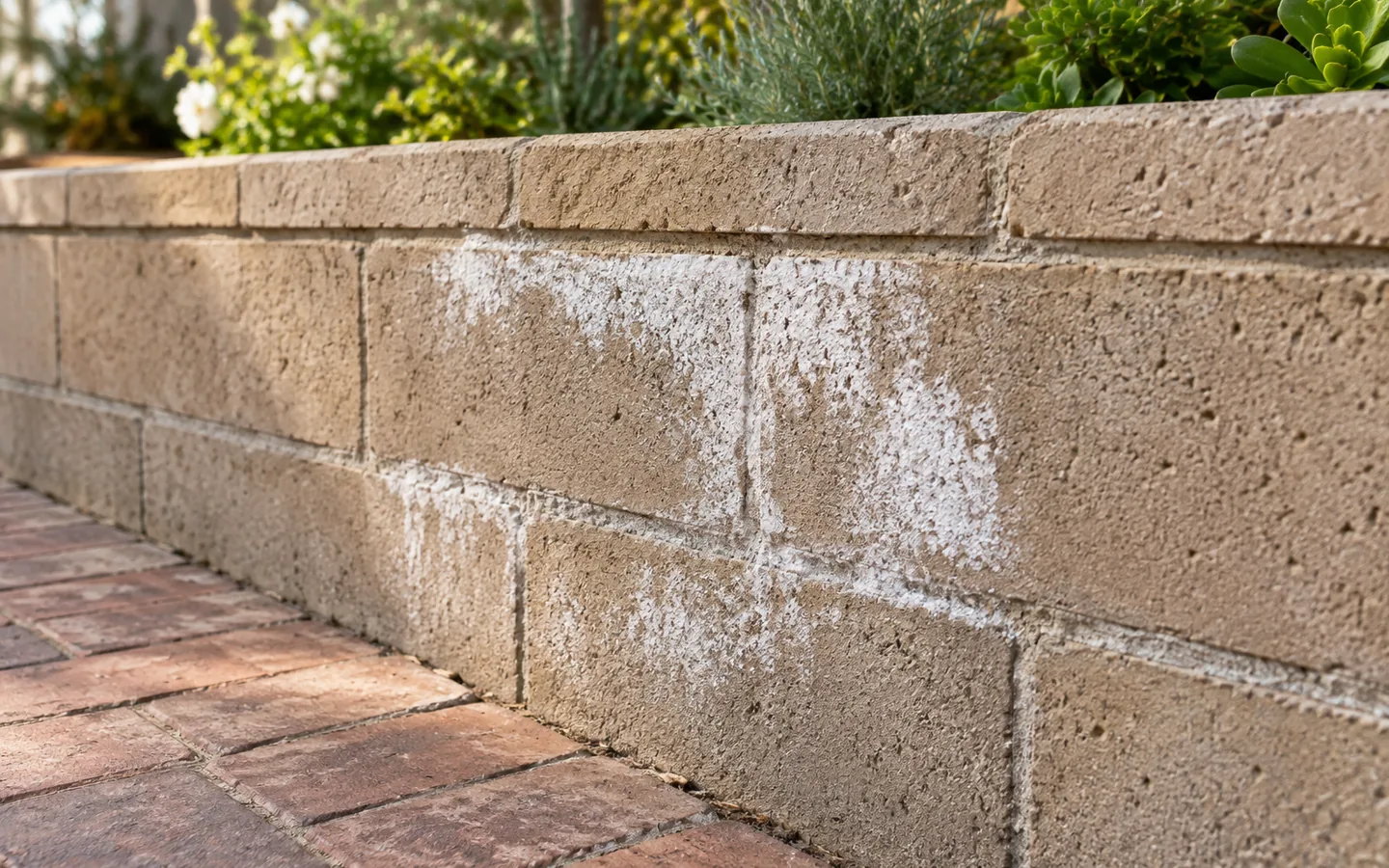
The white deposits on masonry, stone and glass around Long Island look similar but come from two directions, and telling them apart matters.
Efflorescence pushes out from within. Brick, pavers, stone and concrete all contain natural mineral salts. When water moves through the material from rain, ground moisture or a drainage issue it dissolves those salts and carries them to the surface, where they dry into a white, chalky bloom. Its extremely common on newer masonry and hardscape, and it keeps returning as long as moisture keeps migrating through.
Calcium builds up from outside. Hard water is the source here sprinklers hitting brick or glass, mineral-heavy runoff, water dripping from the same spot repeatedly. The minerals deposit and harden into scale on the surface, the crusty white buildup you see on foundation blocks, pool tile and glass.
Neither responds to a normal wash. Both are mineral deposits with a chemistry of their own, and rinsing or pressure washing barely touches them. They need to be dissolved.
Mineral deposits are a chemistry problem, and the treatment has to suit both the deposit and the surface underneath.
We identify which it is first. Efflorescence and hard-water calcium respond to different treatments, and the surface brick, natural stone, concrete, pavers or glass sets the strength and approach. A treatment safe on foundation block is not the same one used on delicate natural stone.
We apply, dwell and rinse. The right specialist cleaner dissolves the deposit so it lifts away, with dwell time to work rather than force. On stubborn calcium scale it may take more than one pass. High pressure isnt the tool on soft masonry it does more harm than the deposit.
We flag the moisture source for efflorescence. Because efflorescence is driven by water moving through the material, it returns until the moisture is addressed. Well point out whats feeding it grading, drainage, a sprinkler so the fix holds.
Like rust, this is mostly a treat-as-it-appears service.
Builds gradually from hard water treated when it appears, and slowed by keeping sprinklers off the glass and masonry.
Returns as long as moisture migrates through the material, so it can need re-treating until the water source is addressed. Once the moisture is dealt with, it stops recurring which is why we always flag the cause.
The easiest way to judge it is your own monitoring: if generation is drifting down on clear days, the glass is usually the reason.
If youd rather not think about it, our residential membership schedules it automatically at member rates, from $39 a month.
Most exterior damage were asked to fix was caused by cleaning. Knowing which surfaces take pressure and which need chemistry is the entire job.
Members of the Power Washers of North America an industry association with standards around method, insurance, and environmental practice. Very few Long Island companies hold it.
Landscaping pre-wet and covered, fixtures shielded, everything rinsed after. It takes longer. Its why we dont leave damage behind.
Founded in 2014 and still run by the person who started it. When something needs sorting, theres someone to call who can actually decide.
Over a decade on Long Island, reviewed by the people who live here.
Most homeowners combine these one mobilization, one visit, better pricing than booking separately.
Efflorescence pushes out from inside the masonry water dissolves natural salts in brick or stone and carries them to the surface, where they dry into a white bloom. Calcium builds up from outside, deposited by hard water. They need different treatments, so identifying which it is comes first.
Both are mineral deposits with their own chemistry not dirt. Rinsing and pressure washing barely touch them. They have to be dissolved with the right specialist treatment for the deposit and the surface.
It can, as long as moisture keeps moving through the material and carrying salts to the surface. Thats why we identify whats feeding it drainage, grading, a sprinkler so once the moisture is addressed, it stops returning.
Yes pool tile, glass and masonry scale all respond to the right treatment. Caught before it etches the surface it lifts cleanly; heavy long-standing scale may need more than one pass.
Yes, when the treatment is matched to the material. Delicate natural stone needs a gentler approach than foundation block, and getting that right is what protects the surface. High pressure is never the answer on soft masonry.
Yes thats efflorescence, very common on newer pavers as they cure. We treat it specifically, and it often reduces naturally over the first year or two once the initial salts have worked out.
Tell us about your home and well come back within 24 hours.
We’ll be in touch within 24 hours. Urgent? Call 631-627-8888 — we answer around the clock.