
Weeds, moss and stains out of the joints, sand restored, and an optional seal that keeps it that way for driveways, patios and walkways.
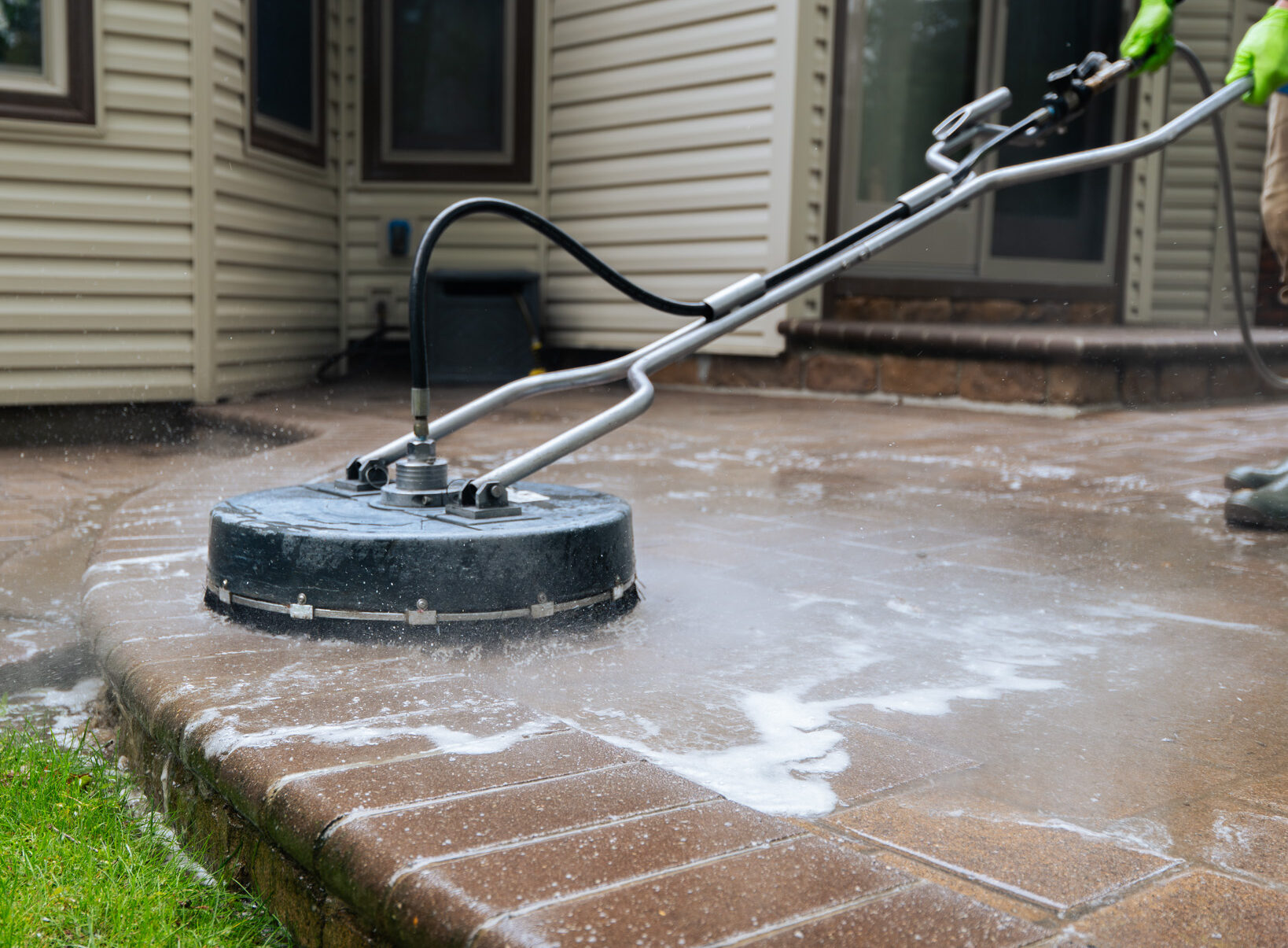
A paver surface is only as good as the sand between the stones, and thats where the trouble starts.
The joints wash out and grow. Rain and time erode the jointing sand, and once its low, weeds and moss move in. Their roots widen the gaps, which lets more sand escape and more water under the surface a cycle that ends in shifting, sinking and tripping edges.
The stone itself stains and grows. Shaded patios and north-facing walkways go green with algae. Efflorescence a white mineral haze leaches up through the stone. Organic staining from leaves, and oil or rust on driveways, all settle into the porous surface.
Sinking follows neglect. Once water gets under pavers through open joints, the base erodes unevenly and stones drop. At that point its a lifting-and-relaying job, not a cleaning one.
Cleaned and re-sanded on time, a paver surface lasts decades. Left to the weeds, it fails from the joints outward.
Pavers are one of the surfaces that genuinely take pressure but its about control, not force.
We clean at the right pressure for the stone, lifting weeds, moss, algae, efflorescence and embedded staining out of the surface and the joints. Concrete pavers, clay brick, bluestone and natural stone each get handled to suit the material.
We re-sand the joints. This is the step that separates cleaning from restoration fresh polymeric jointing sand locks the stones, resists weed regrowth and stops the wash-out cycle. Skipping it means the weeds are back by next season.
We can seal the surface if you want it. A quality sealer locks in the sand, resists staining and oil, deepens the color and makes future cleaning far easier. On a driveway or a heavily used patio it pays for itself in longevity.
Every one to two years keeps most Long Island paver surfaces ahead of the weeds and growth sooner for shaded patios and heavy-traffic driveways.
As needed, usually with each deep clean, and any time you can see the joints emptying.
Every two to three years if you choose to seal a sealed surface stays cleaner, resists stains and makes each subsequent clean easier.
If youd rather not think about it, our residential membership schedules it automatically at member rates, from $39 a month.
Most exterior damage were asked to fix was caused by cleaning. Knowing which surfaces take pressure and which need chemistry is the entire job.
Members of the Power Washers of North America an industry association with standards around method, insurance, and environmental practice. Very few Long Island companies hold it.
Landscaping pre-wet and covered, fixtures shielded, everything rinsed after. It takes longer. Its why we dont leave damage behind.
Founded in 2014 and still run by the person who started it. When something needs sorting, theres someone to call who can actually decide.
Over a decade on Long Island, reviewed by the people who live here.
Most homeowners combine these one mobilization, one visit, better pricing than booking separately.
Yes, and its the step that matters. Fresh polymeric jointing sand locks the stones, resists weed regrowth and stops the sand washing out. Cleaning without re-sanding means the weeds are back by next season.
Its optional but worth it on driveways and busy patios. A quality sealer locks in the joint sand, resists oil and staining, deepens the color and makes every future cleaning easier. Well tell you whether it makes sense for your surface.
We remove them and re-sand to resist regrowth, and sealing slows it further. On a shaded surface some regrowth is natural over time, but proper re-sanding makes it far slower than it was.
Efflorescence mineral salts leaching up through the stone and drying on the surface. Its common on newer pavers and we treat it specifically; it doesnt come off with a plain rinse.
Yes, unlike siding but at controlled pressure suited to the material, and always followed by re-sanding. Too much pressure erodes the joints and pits softer stone, so its about control, not force.
Cleaning and re-sanding stops the cause water getting under open joints. Stones that have already dropped need lifting and relaying, which is a separate job we can advise on when we assess.
Tell us about your home and well come back within 24 hours.
We’ll be in touch within 24 hours. Urgent? Call 631-627-8888 — we answer around the clock.