Driveways, walkways and patios brought back algae, oil, rust and embedded grime lifted with surface cleaning that leaves no zebra stripes.
Concrete looks tough, but its porous and that porosity is why it stains and darkens the way it does.
Organic growth greens the shade. Algae and moss colonize damp, shaded concrete north-facing walks, tree-covered patios, the strip beside the garage that never sees sun. Its slick when wet and a genuine slip hazard.
Oil and rust soak in. On driveways, engine drips and rust from anything metal left standing sink into the surface. Given time they set, and a stain that would have lifted easily early becomes a permanent shadow.
Salt does structural damage. This is the one that matters most. Winter road salt and coastal air drive into porous concrete, and as the trapped salts expand and contract they cause spalling the surface flaking and pitting apart. Once concrete spalls, cleaning cant bring it back; its a resurfacing job.
Keeping concrete clean isnt only cosmetic. Lifting salt and growth before they penetrate is what keeps the slab sound.
Concrete takes real pressure, but doing it well is about technique, not just power.
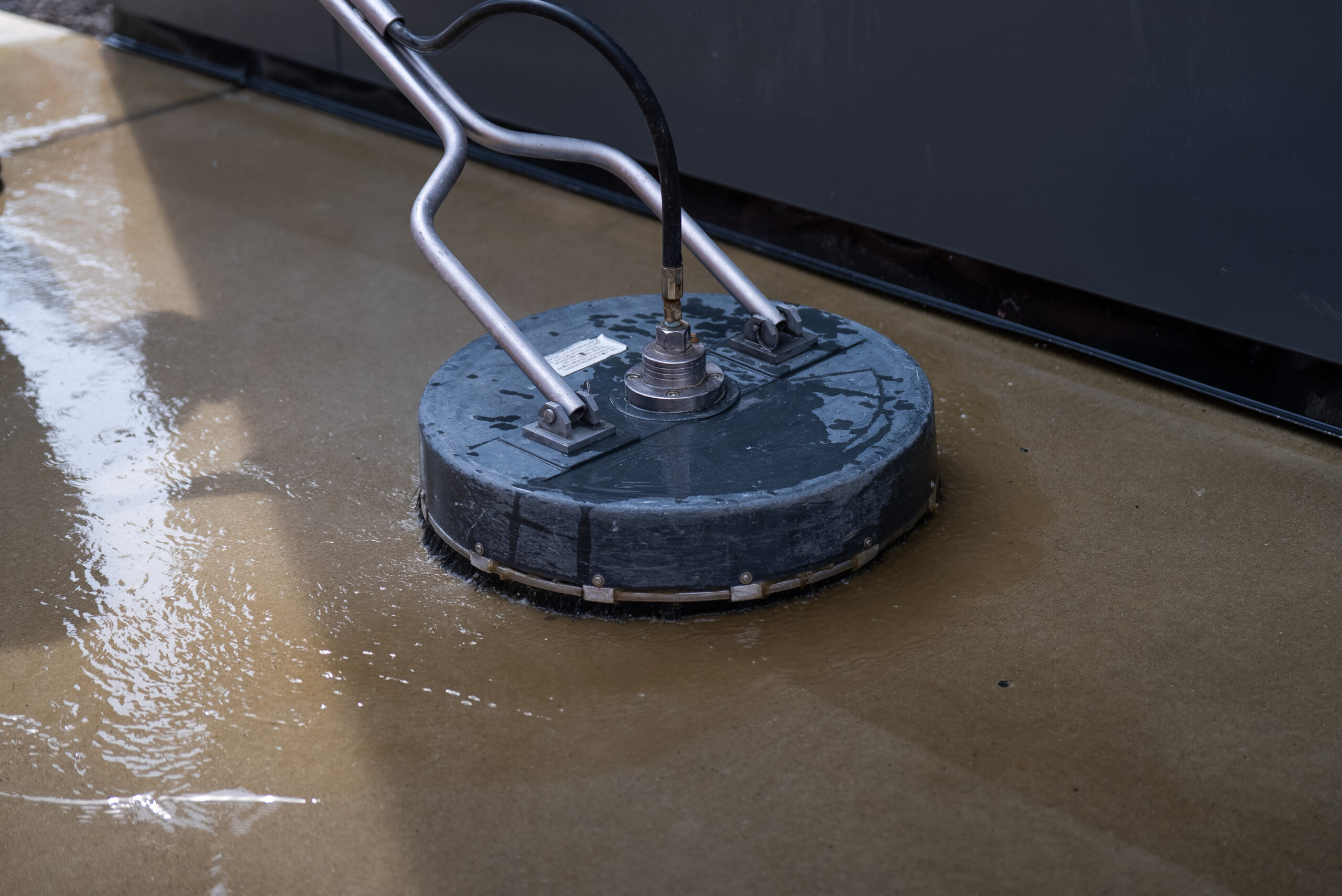
We use surface cleaners, not just a wand. A spinning surface cleaner delivers even pressure across the whole slab, which is what avoids the zebra striping the wand marks left when someone cleans concrete freehand and misses overlaps. The finish comes out uniform, edge to edge.
Stains get the right treatment, not just more pressure. Oil is broken down with a degreaser before cleaning. Rust needs a specific rust remover pressure alone drives it deeper. Organic growth is treated so its killed at the root, not just blasted off to regrow in a month.
We can seal it afterward. Sealing concrete resists oil, salt and staining, slows spalling and makes the surface far easier to keep clean. On a driveway exposed to winter salt, its worth considering.
Suits most Long Island driveways and walkways and a spring clean to clear winter salt is the single most valuable one for the concretes longevity.
For shaded, growth-prone surfaces and high-traffic driveways.
Every two to three years if you seal it slows salt penetration and spalling and keeps each clean easier.
If youd rather not think about it, our residential membership schedules it automatically at member rates, from $39 a month.
Most exterior damage were asked to fix was caused by cleaning. Knowing which surfaces take pressure and which need chemistry is the entire job.
Members of the Power Washers of North America an industry association with standards around method, insurance, and environmental practice. Very few Long Island companies hold it.
Landscaping pre-wet and covered, fixtures shielded, everything rinsed after. It takes longer. Its why we dont leave damage behind.
Founded in 2014 and still run by the person who started it. When something needs sorting, theres someone to call who can actually decide.
Over a decade on Long Island, reviewed by the people who live here.
Most homeowners combine these one mobilization, one visit, better pricing than booking separately.
Usually, yes. We break oil down with a degreaser before cleaning rather than relying on pressure, which just spreads it. Fresh stains lift well; ones that have soaked in for years may lighten rather than vanish entirely.
Spalling usually from salt. Winter road salt and coastal air penetrate porous concrete and, as the salts expand and contract, the surface flakes apart. Cleaning removes salt before it does this, but concrete thats already spalled needs resurfacing.
Not the way we do it. We use a surface cleaner that applies even pressure across the whole slab, which avoids the wand marks and zebra striping you get from cleaning freehand.
On a driveway exposed to winter salt, its worth it. Sealing resists salt, oil and staining, slows spalling and makes future cleaning easier. Well advise based on the condition and exposure of your surface.
Yes, with a dedicated rust treatment pressure alone drives rust deeper. Caught reasonably early it removes cleanly; long-set staining may lighten substantially rather than disappear.
Annually for most homes, ideally in spring to clear winter salt. Shaded, growth-prone or heavily used surfaces benefit from more frequent cleaning.
Tell us about your home and well come back within 24 hours.
We’ll be in touch within 24 hours. Urgent? Call 631-627-8888 — we answer around the clock.