Most facility managers can tell you the last time the HVAC was serviced. Far fewer can tell you the last time the trash or linen chute was cleaned. That gap is where the problems start.
In a hospital or care facility, the chute handles contaminated material every hour of every day and gets inspected almost never. On Long Island, trash chute cleaning is one of the most deferred items in a healthcare facility’s maintenance plan, and the buildings that skip it tend to find out the hard way. Odor complaints. Pest activity. An infection-control auditor asking a question nobody prepared for.
A chute is a vertical shaft that touches every floor of your building. When it goes neglected, it doesn’t stay a chute problem. It becomes a sanitation problem, then a pest problem, then a liability problem.
What’s actually coating the inside of your chute
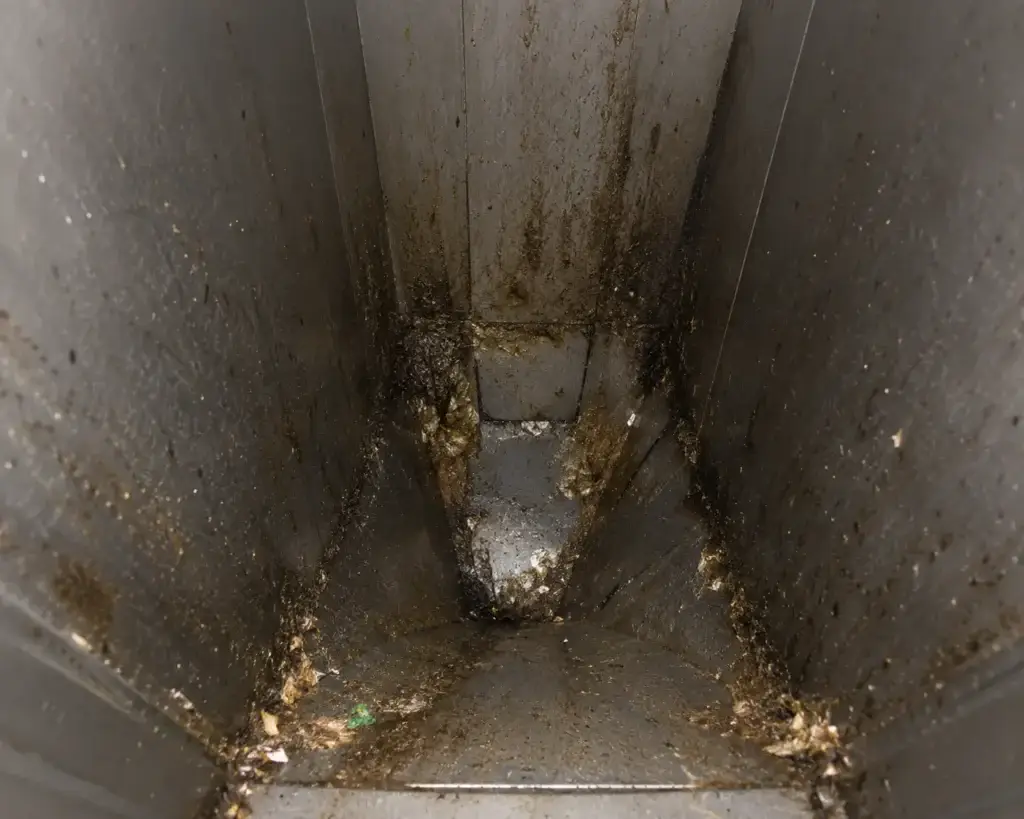
A trash chute looks empty between uses. It isn’t. Every bag that drops down the shaft drags residue against the walls. Bags tear. Liquids leak. Over months, the interior builds a tacky film of food waste, organic matter, grease, and moisture that bacteria feed on and that holds odor the way a sponge holds water.
Linen chutes carry their own load. In a healthcare setting, soiled linen means bodily fluids, and a chute that moves that material all day collects the same residue plus the airborne particles that come off fabric in motion.
Long Island makes it worse in summer. Coastal humidity and weeks of heat turn a damp collection room into an incubator. The smell a nurse reports on the third floor in July usually started as buildup in a chute nobody opened since winter.
Why a linen chute is a different problem than a trash chute
Treating both chutes the same is a common mistake, and in a healthcare facility it’s a consequential one.
Soiled linen moving down a shaft pushes air ahead of it. That air carries whatever was on the fabric. Federal infection-control guidance has long flagged that improperly designed or maintained linen chutes can disperse microorganisms through a building, which is exactly why soiled linen is supposed to be bagged before it ever enters the chute. When bags tear on a rough or residue-coated interior, that control breaks down at the worst possible point.
This is the part residential cleaners never address, because residential buildings don’t carry the same risk. A hospital does. The linen chute sits inside your infection-prevention program whether it’s documented there or not. Cleaning it on a schedule is one of the quieter ways a facility keeps that program defensible.
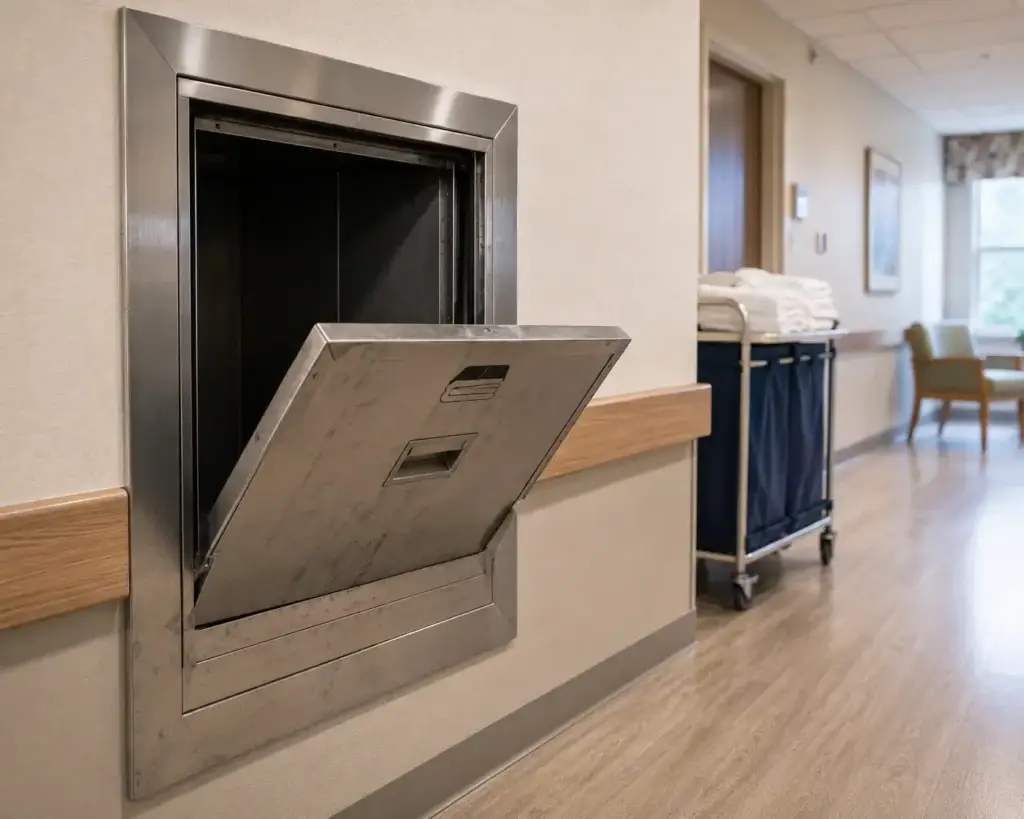
The pest problem starts in the chute, not the kitchen
When a facility reports roaches, flies, or rodents, the kitchen and the dumpster usually get blamed first. The chute and its collection room are the part nobody checks.
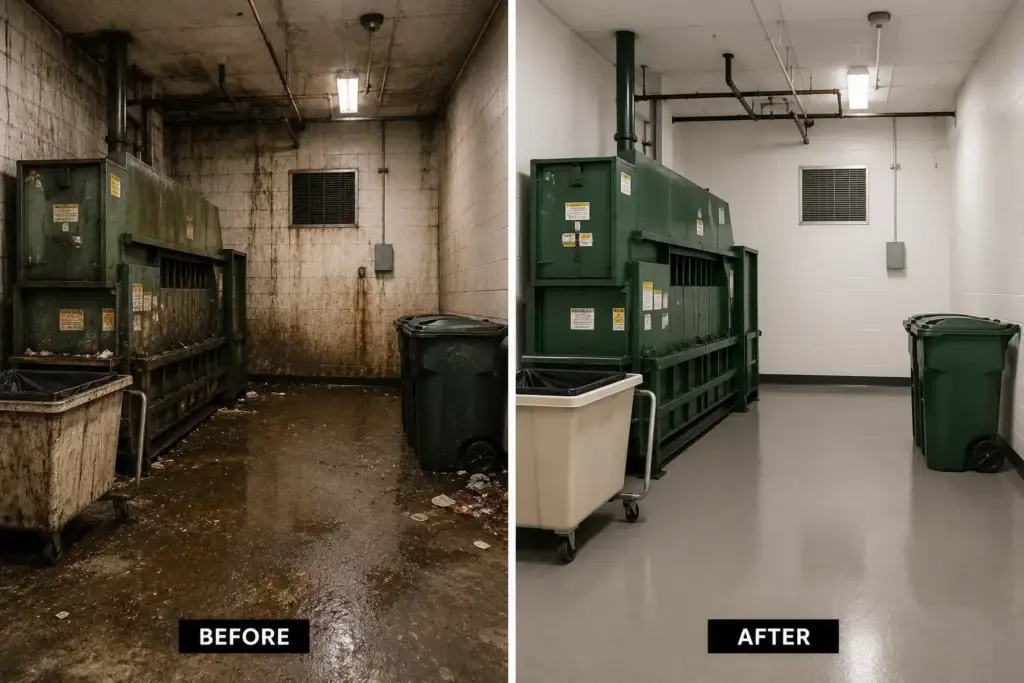
They should. A residue-coated chute is food and shelter in one place. Insects are drawn to the organic film and the standing moisture. Roaches breed in the warm, dark seams of a collection room. Mice and rats nest where waste piles up and stays undisturbed. The chute then does something a dumpster can’t: it gives pests a protected vertical highway to every floor.
You can spray the symptoms all year. If the source stays coated, the activity comes back. Routine chute and collection-room cleaning removes the food supply that pest treatment alone can’t touch, which is why proactive facilities pair the two instead of choosing between them.
Trash chute cleaning on Long Island: how often is enough?
“Twice a year” is the answer most vendors give, and for a low-traffic office building it might be fine. For healthcare, it’s a starting point, not a rule. The right frequency depends on what the chute carries and how hard it works.
A practical way to set it:
- Quarterly for high-volume hospitals, large nursing homes, and any facility where the linen chute moves soiled healthcare textiles daily. High throughput plus biological material plus Long Island summer heat is the combination that justifies four cleanings a year.
- Quarterly to semi-annual for mid-size care facilities, assisted living, and surgical or dialysis centers with steady but lighter chute traffic.
- At least annually as the floor for any commercial chute, with the understanding that annual is the minimum that keeps buildup from becoming entrenched, not the target for a busy building.
Two facilities the same size can need different schedules. A building reporting recurring odor or pest activity between cleanings is telling you its interval is too long.
What a proper chute cleaning actually includes
Knowing what the work involves helps you vet a vendor and avoid paying for a rinse.
A complete service cleans the full interior of the shaft top to bottom, not just the openings people can see. It addresses the intake doors on every floor, the discharge area at the bottom, and the collection or compactor room, which is usually filthier than the chute itself. Heat and proper agitation matter, because cold water smears residue rather than removing it. A sanitizing and deodorizing step follows so the surface isn’t just cleaner but less hospitable to bacteria and pests.
For a healthcare facility, two more things matter. The work has to happen without disrupting clinical operations, which means off-hours scheduling and clean staging. And it should come with documentation: a record of what was serviced and when, the kind of paper trail that makes an inspection or an infection-control review go smoothly instead of sideways.
The liability math is simple
A scheduled chute cleaning is a predictable, modest line item. The things it prevents are not.
A pest infestation traced to a facility’s own waste system is a reputational and regulatory problem before it’s a cleaning bill. A linen chute flagged during an infection-control audit is a finding that follows the facility. A single odor or sanitation complaint in a healthcare setting carries weight that the same complaint wouldn’t in an office park, because patients and families read it as a sign of how the rest of the building is run.
Preventative maintenance is almost always cheaper than restoration, and in healthcare it’s also cheaper than the trust you lose when the basics slip.
Frequently asked questions
How often should a hospital clean its trash and linen chutes?
High-volume hospitals and busy care facilities generally do best on a quarterly schedule, especially for linen chutes carrying soiled textiles. Lighter-traffic facilities may hold a semi-annual interval. Annual cleaning is the minimum for any commercial chute, not the goal for a busy one.
Does chute cleaning really help with pests?
Yes. A residue-coated chute and collection room is a food and shelter source that draws roaches, flies, and rodents and gives them access to every floor. Removing that buildup eliminates the source that pest treatment alone can’t reach, which is why facilities pair the two.
Is a linen chute really an infection-control concern?
It can be. Soiled linen moving down a shaft pushes contaminated air ahead of it, and federal guidance addresses chute design and the bagging of soiled linen for that reason. A clean, well-maintained chute supports the controls a healthcare facility already has in place.
Can chute cleaning be done without disrupting patient care?
Yes. The work is scheduled around clinical operations, typically off-hours, with clean staging so daily activity isn’t interrupted.
What does a real chute cleaning include?
The full interior of the shaft, the intake doors on every floor, the discharge area, and the collection or compactor room, finished with a sanitizing and deodorizing step. For healthcare, it should also come with service documentation.
The takeaway
The chute is the one system in a healthcare building that handles contaminated material constantly and gets attention almost never. Put it on a schedule and it stays a quiet, boring line item. Leave it alone and it becomes the source of the odor, pest, and compliance problems that are far harder to walk back.
If your facility can’t name the last time its chutes were serviced, that’s the answer to whether it’s time. A scheduled cleaning program keeps the system documented, defensible, and out of your complaint queue.