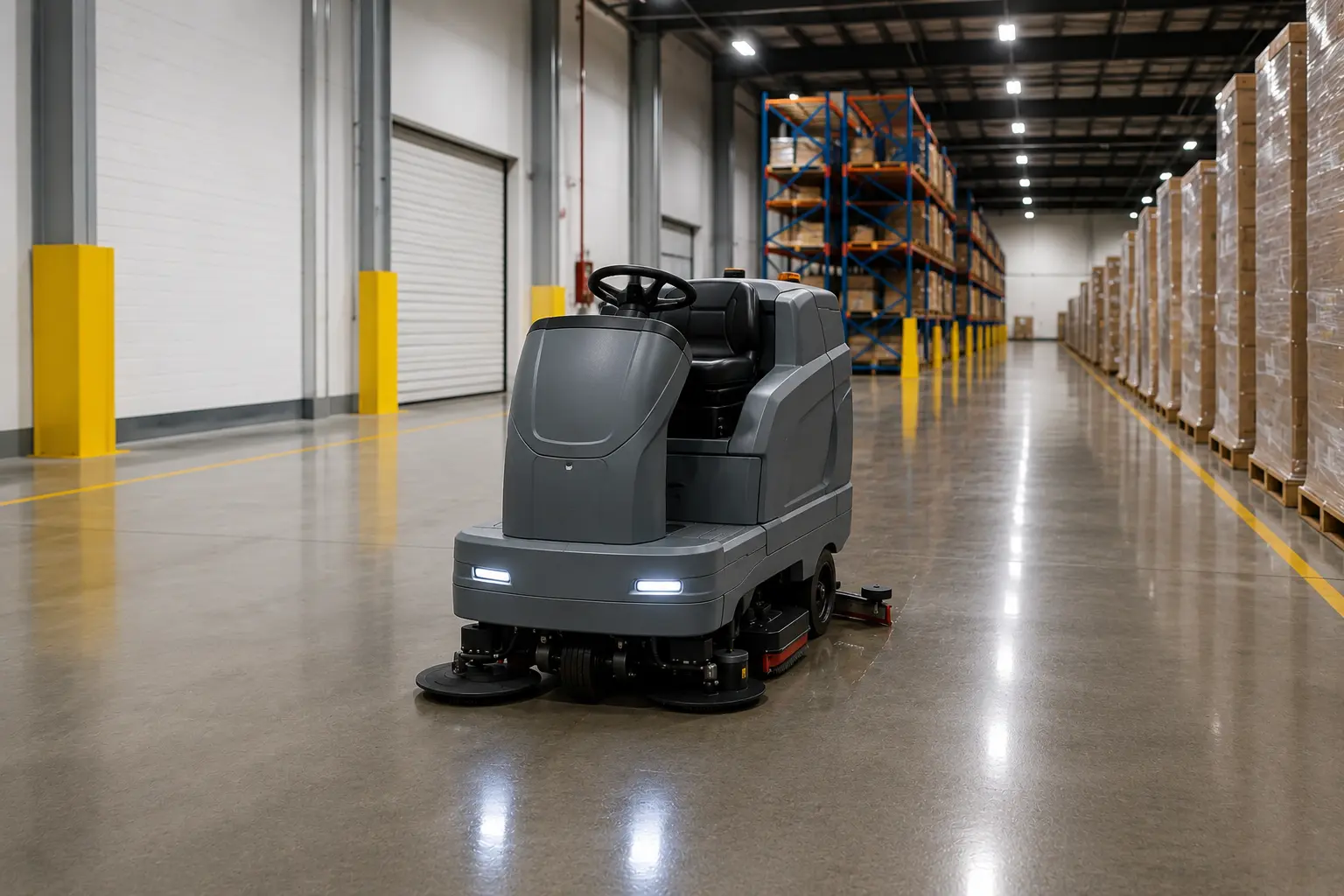
A warehouse floor is the most-used surface in the building and the least-maintained one. It carries every forklift, every pallet jack, every worker, every delivery, all day. Then it gets swept when someone remembers.
On Long Island, warehouse floor cleaning is treated as housekeeping when it’s closer to asset protection. A concrete slab is a major capital surface. How it’s cleaned, and how often, decides whether it lasts fifteen years or starts failing in five. It also decides how much slip-and-fall exposure a facility is carrying without realizing it.
That’s the part worth slowing down on. The floor isn’t just something you walk on. It’s part of your safety system, part of your building’s value, and after any construction work, it’s a problem with a clock on it.
The floor is part of your safety liability
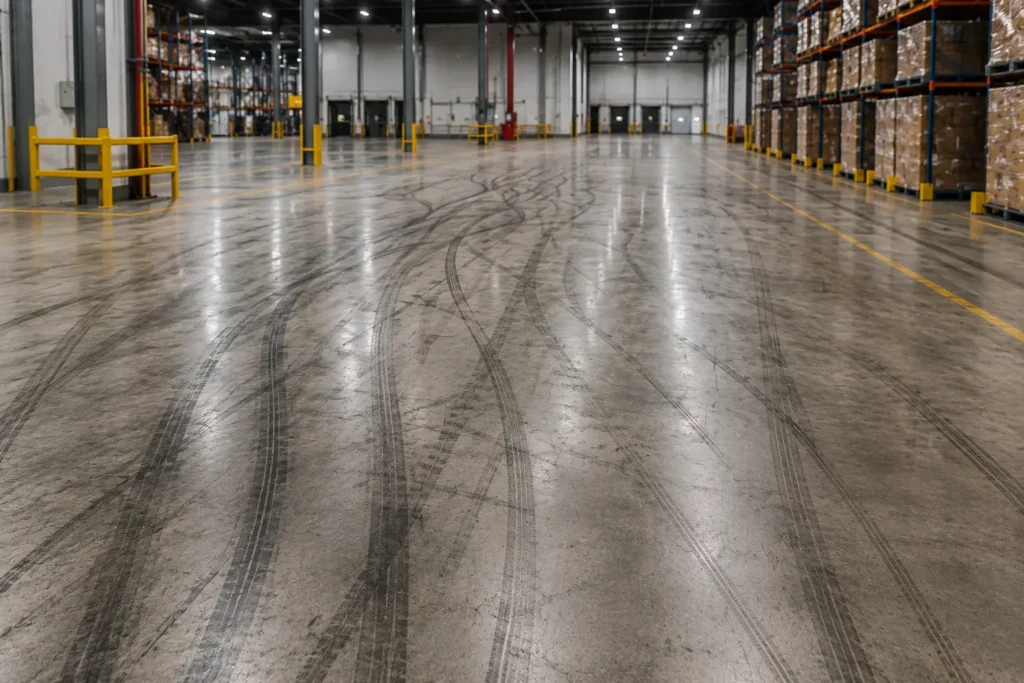
Slips, trips, and falls are among the leading causes of workplace injury and lost time. OSHA’s walking-working surfaces standard, 29 CFR 1910.22, is direct about it: floors have to be kept clean, dry, and free of hazards that could cause someone to slip or fall. That’s not a suggestion. It’s the standard a facility gets measured against after an incident.
A dusty concrete floor looks harmless. It isn’t. Fine dust and grit reduce traction, and a film of oil or rubber near a dock or a forklift lane lowers it further. The floor can pass a glance and still fail the moment someone plants a foot wrong.
There’s a second liability most managers miss. Regular cleaning is how you spot the cracks, spalling, and worn spots that become trip hazards. A floor that’s never properly cleaned hides its own defects until one of them becomes a claim.
A single slip-and-fall claim, from a worker or a visitor, costs more than a year of scheduled floor cleaning. That math almost never runs the other way.
What actually builds up on a warehouse floor
A warehouse floor collects more than dirt. Tire marks and rubber from forklift traffic. Oil and hydraulic fluid from equipment. Dust that settles into every pore of unsealed concrete. On Long Island, add what comes through the loading dock: rain, road salt, and slush dragged in all winter, then humidity in summer that keeps damp areas from drying.
Unsealed or worn concrete is porous, so it drinks in oil and contaminants instead of holding them on the surface. Once that happens, a mop won’t touch it. It takes mechanical scrubbing with the right chemistry to pull embedded grime back out.
Left alone, that buildup does two things at once. It becomes a safety problem, and it becomes an abrasive.
Why a dirty floor costs you the floor
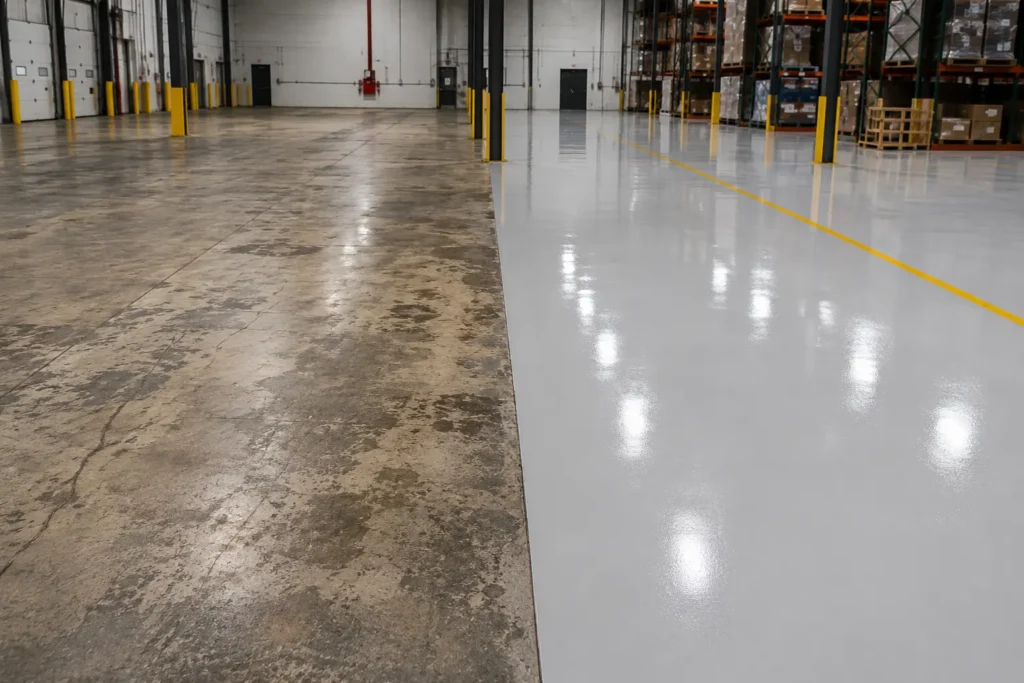
This is the part that turns cleaning from an expense into a saving.
Grit on a concrete floor works like sandpaper. Every forklift wheel and every pallet load drags it across the surface, wearing down the slab and any coating or seal on top of it. The dirt you leave on the floor is quietly grinding the floor away.
It doesn’t stop at the concrete. That same grit migrates into forklift wheels and bearings and wears the equipment faster too. A floor left dirty day after day adds cost in places nobody connects back to the floor.
Follow it far enough and you reach resurfacing or recoating, which runs into serious money and takes the space out of service while it happens. Periodic professional scrubbing removes the abrasive load before it does that damage. Deep cleaning, buffing, and resealing on a schedule can push a floor replacement years down the road. Preventative maintenance is almost always cheaper than restoration, and a warehouse floor is one of the clearest examples of it.
The post-construction window nobody plans for
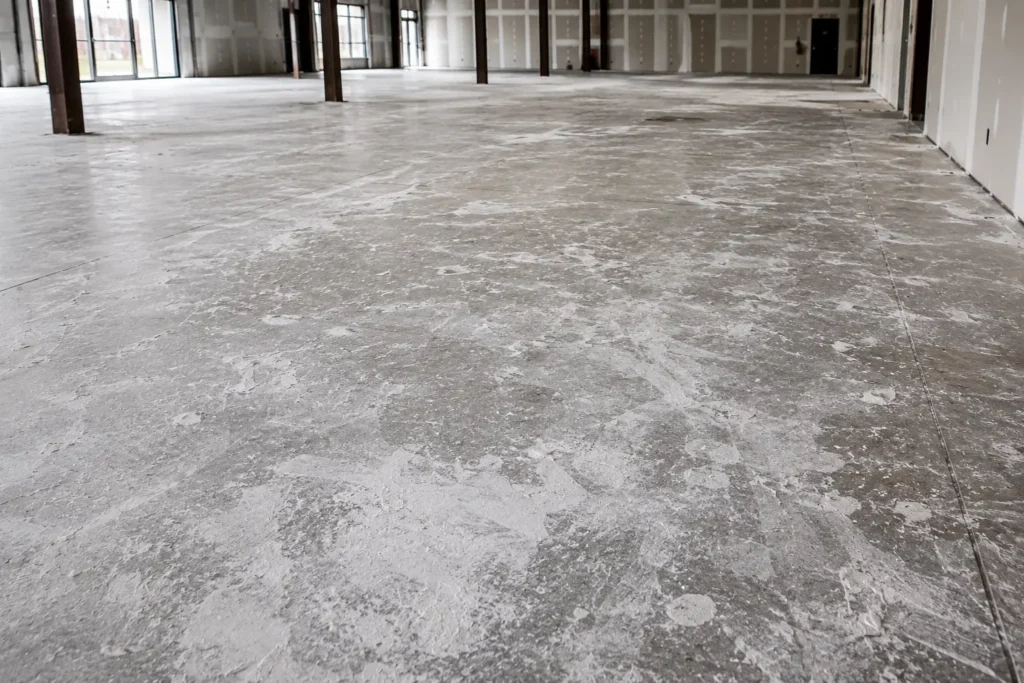
New construction and renovations leave a floor in the worst shape it will ever be in, right when it matters most.
When the trades finish, the slab is coated in fallout: fine drywall and gypsum dust, thinset and mortar splatter, grout haze, paint overspray, adhesive residue, and curing compound. A quick builder’s sweep moves the big debris and leaves the rest.
That leftover layer is the problem. If the floor gets sealed or coated over it, the contamination is locked in and the coating fails to bond where the residue sits. If the floor is simply put into service, the first weeks of forklift traffic grind all of it into the surface. Either way, you’ve started a brand-new floor’s life with a defect built in.
Post-construction floor cleaning is the step between the general contractor handing over the building and the floor going into service. Done right, it strips construction residue down to clean concrete so a seal or coating actually adheres, and so the slab starts its service life clean instead of compromised. It’s a one-time job with a long payoff, and it’s the easiest thing to skip in the rush to occupy a building.
If a warehouse or commercial space on Long Island is coming out of construction, the floor is on a clock. Clean it before it gets sealed in.
How often should a warehouse floor be cleaned?
There’s no single number, because a warehouse floor needs two different things.
Daily housekeeping keeps the surface clear of the spills, debris, and dust that create immediate hazards. That’s a facility’s own staff, and it’s the baseline.
Periodic deep cleaning is the part that gets skipped. This is the mechanical scrubbing and resealing that pulls embedded oil, grit, and grime out of the concrete, the work daily mopping can’t do. For most Long Island warehouses, a quarterly to semi-annual deep clean fits, with higher-traffic operations and dirtier processes leaning toward quarterly.
Post-construction cleaning is its own event, handled once, at handover, before the floor is sealed or put into use.
A floor that’s slick, dusty, or visibly worn between deep cleanings is telling you the interval is too long.
What a proper commercial floor cleaning includes
Knowing what the work involves helps you vet a vendor and avoid paying for a mop-and-go.
A real service starts with debris and dust removal, then uses mechanical scrubbing matched to the floor type, unsealed concrete, polished concrete, epoxy, and sealed floors each need different chemistry and different handling. It targets the oil, grease, rubber, and embedded grime that create both slip hazards and long-term wear. Where appropriate, it finishes with resealing that protects the surface and makes the next routine cleaning more effective.
For a working warehouse, two more things matter. The work has to happen around your operations, which usually means off-hours or weekend scheduling so the floor is back in service when your day starts. And a vendor who assesses the floor honestly, and tells you when a cleaning will restore it versus when it’s past that point, is worth more than one who quotes every floor the same.
Frequently asked questions
How often should a warehouse floor be deep cleaned?
Daily housekeeping handles spills and debris. A deeper mechanical scrub to pull embedded oil and grit out of the concrete generally fits a quarterly to semi-annual schedule, with high-traffic or dirtier operations leaning quarterly.
Why does floor cleaning matter for liability?
OSHA’s walking-working surfaces standard requires floors to be kept clean, dry, and free of slip and trip hazards. Dust, oil, and rubber lower traction, and regular cleaning is also how you catch cracks and worn spots before they cause a fall.
What is post-construction floor cleaning and why is it separate?
After construction, the slab is covered in drywall dust, thinset, grout haze, adhesive, and curing residue. Post-construction cleaning strips that down to clean concrete before the floor is sealed or put into service, so a coating bonds properly and the floor doesn’t start its life with contamination ground in.
Does dirty flooring really shorten a warehouse floor’s life?
Yes. Grit acts like sandpaper under forklift and foot traffic, wearing down the slab and any coating, and it also wears equipment faster. Removing that abrasive load on a schedule delays expensive resurfacing or recoating.
Can the floor be cleaned without shutting down operations?
Yes. Deep cleaning is typically scheduled off-hours or on weekends so the floor is clean and back in service before the next shift.
The takeaway
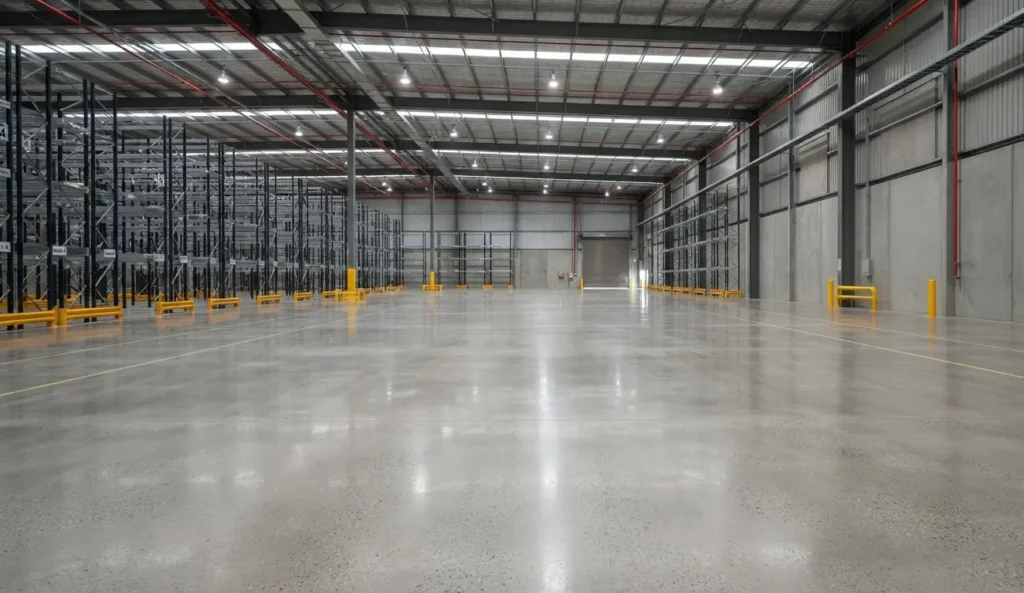
A warehouse floor is a capital asset that gets treated like a chore. Clean it on a schedule and it stays safe, holds its finish, and lasts. Neglect it and it grinds itself down, hides its own hazards, and eventually hands you a resurfacing bill and a liability you didn’t see coming.
If a floor is coming out of construction, or hasn’t had a real deep cleaning in longer than you can remember, that’s the moment to act. A scheduled floor-care program keeps the surface safe, protects the investment, and costs a fraction of what fixing a neglected floor does.