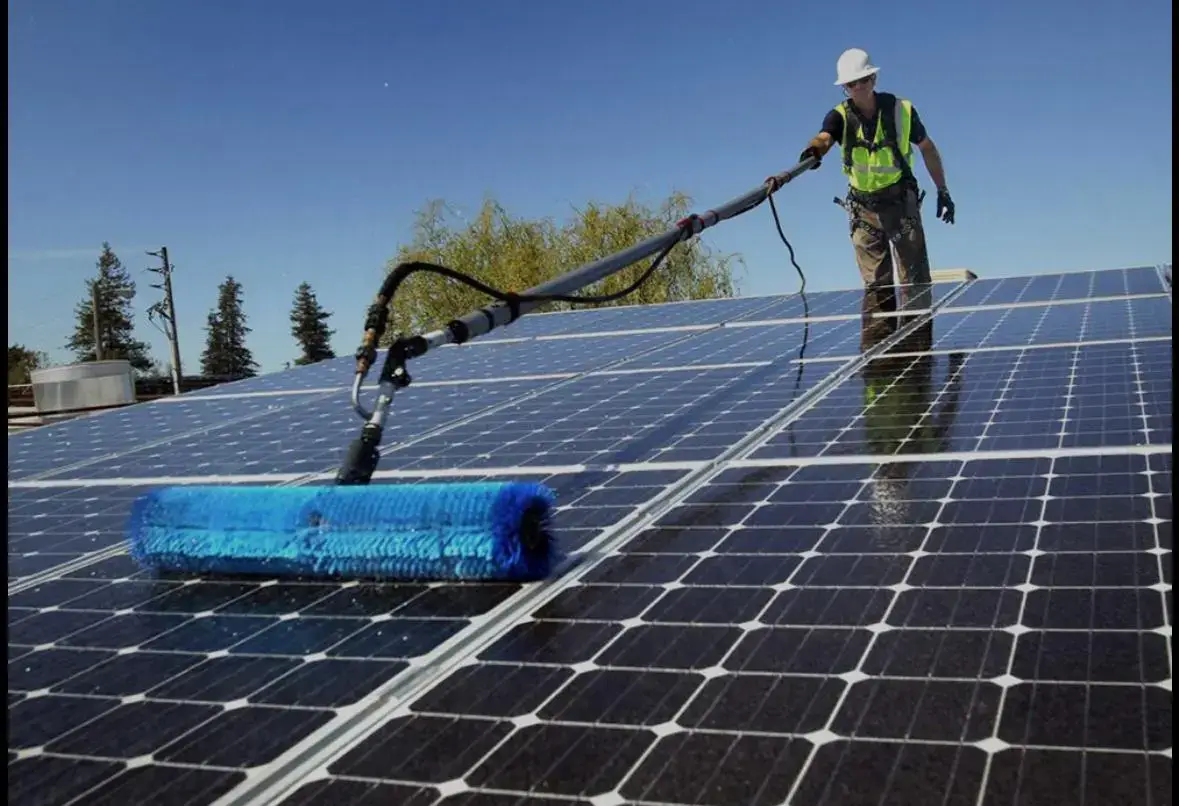
A rooftop solar installation is not a set-it-and-forget-it investment. On Long Island, between the salt air off the Atlantic and Great South Bay, seasonal pollen saturation, and the corrosive road salt residue that coats every exposed surface from November through March, a solar system that hasn’t undergone solar panel cleaning maintenance in 12+ months is likely underperforming — and costing its owner real money right now.
According to the National Renewable Energy Laboratory (NREL), soiled solar panels lose between 15% and 25% of their rated output depending on the type and volume of contamination present. For a commercial rooftop system producing 50,000 kWh annually, that’s up to 12,500 kWh of lost generation per year — energy that was already paid for at installation and is simply not being captured.
That is not a cleaning problem. That is an asset management problem.
The Long Island Contamination Problem Is Worse Than the National Average
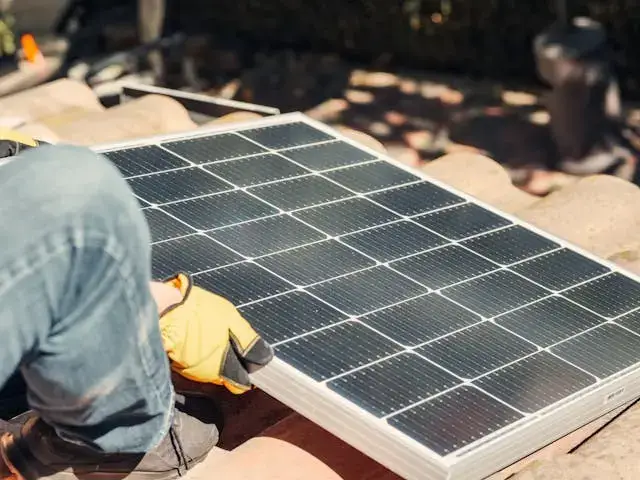
Solar Panel Contamination Problem
Solar panel soiling data from the Southwest ; where much of the national research originates – does not map cleanly onto Long Island’s environment. Dry dust is easier to remove than the biofilm-based contamination that builds up in the Northeast.
Suffolk County properties face a compounding contamination cycle specific to this region:
Winter salt accumulation. Road salt and brine spray from the Long Island Expressway and Sunrise Highway corridors migrate onto rooftop surfaces throughout the cold season. That salt residue bonds with moisture and creates mineral scale directly on panel glass — the same calcium and mineral buildup documented on Long Island properties every post-winter season. Unlike dust, it does not rinse off with rain.
Spring pollen biofilm. Long Island’s May pollen counts are among the highest in New York State, driven by the high density of oak, birch, and grass across Nassau and Suffolk counties. On solar panels, pollen does not sit loosely on the surface – it becomes a sticky biofilm base layer that traps moisture and seeds mold and algae growth through the summer months.
Bird dropping hot spots. A single bird dropping on a photovoltaic cell creates a “hot spot” – a localized area where that cell is forced to operate at reduced capacity, creating electrical resistance that stresses the entire panel string. The American Solar Energy Society has documented that bird dropping contamination is one of the most efficiency-destructive and least reversible forms of soiling when left unaddressed.
Salt air mineral deposits. Properties within 5 miles of the coastline – which covers a substantial portion of Long Island’s residential and commercial footprint – face ongoing silica and mineral deposition from airborne moisture off the Atlantic and Great South Bay. This creates white calcium film on panel glass that requires professional calcium removal treatment, not a garden hose.
Why This Matters Differently Depending on Your Role
For Commercial Property Managers and Facility Managers:
A commercial rooftop solar system represents a capital asset on the balance sheet. Deferred maintenance on that asset, including panel cleaning – is not a neutral decision. NREL data shows efficiency degradation compounds when soiling is left unaddressed across multiple seasons. A 20% output reduction in Year 1 that is not corrected typically results in accelerated surface degradation that shortens panel lifespan. The cost to replace panels is orders of magnitude higher than the cost of a twice-annual professional cleaning contract.
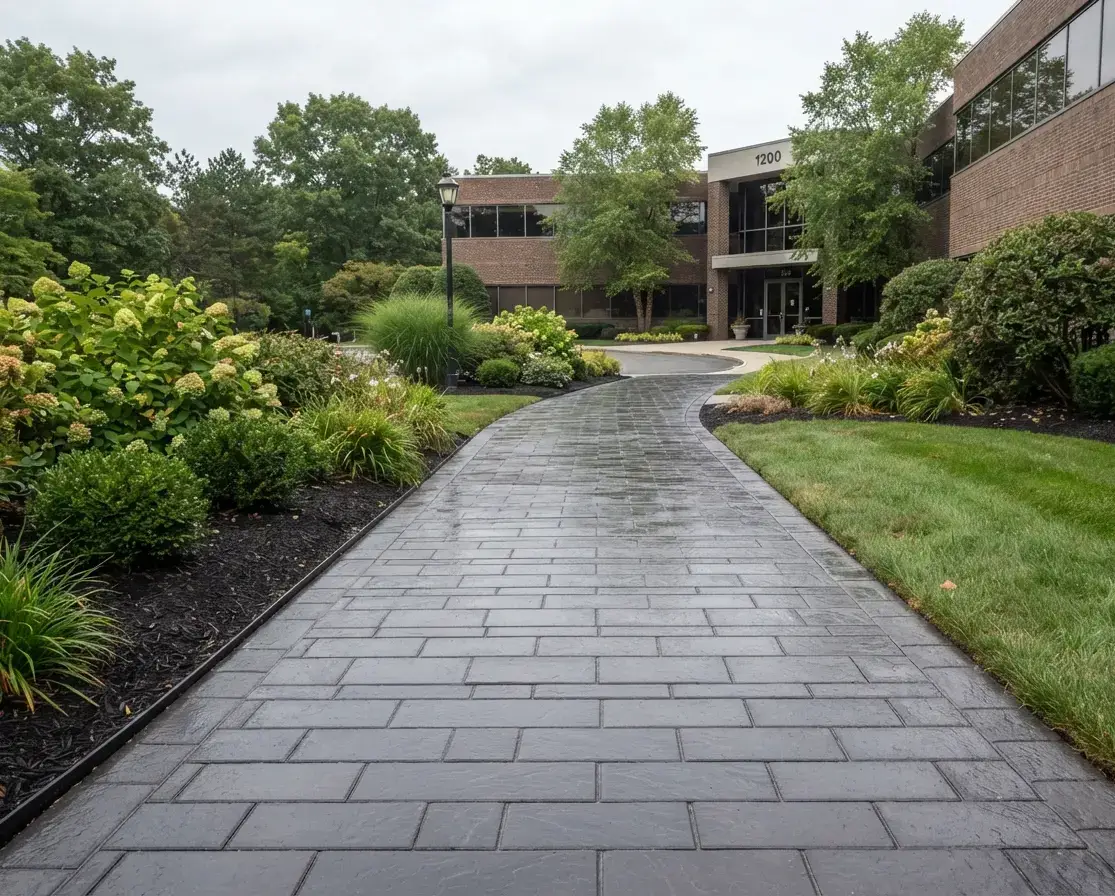
If the property also has parking lots, walkways, or building facades, consolidating that exterior maintenance under a single commercial pressure washing NY provider creates operational efficiency and consistent documentation — both valuable during property inspections or asset reviews.
For HOA Boards and Community Managers:
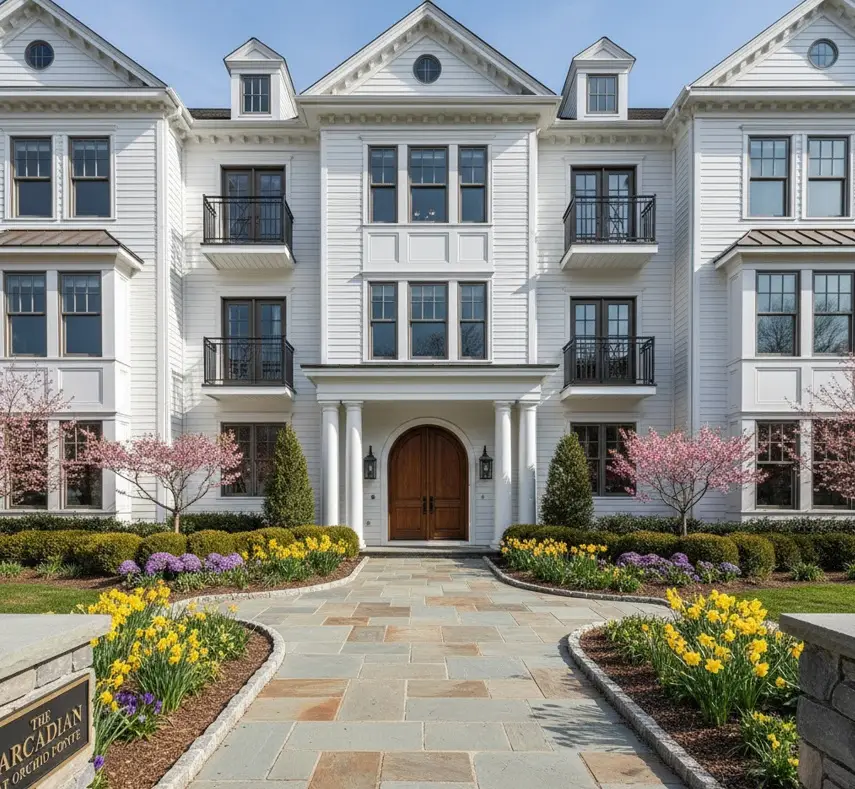
Many Long Island HOA communities, particularly in Suffolk County developments built or retrofitted in the past decade, have solar installations on common-area rooftops or guidelines governing residential panel maintenance. Dirty panels on visible rooftops affect property values and resident satisfaction. According to Zillow research, solar installations increase home values by an average of 4.1% – but only when they are visibly maintained. A community-wide HOA exterior cleaning program that includes solar panel maintenance reinforces that investment at the neighborhood level.
For Residential Homeowners:
The average Long Island residential solar system produces approximately 8,000–10,000 kWh per year. At current Long Island utility rates — PSEG Long Island’s residential rate averaging around $0.22–$0.24 per kWh — a 20% efficiency loss translates to $352–$480 in unrealized annual savings on a system that was specifically purchased to reduce utility costs. Over a 10-year period without regular solar panel cleaning maintenance, that loss compounds significantly against the system’s projected payback timeline.
The Cost vs. Risk Comparison
This is where the decision becomes straightforward:
| Professional Solar Panel Cleaning (Twice Annual) | Cost of Neglect | |
| Typical cost | $150–$400 per residential visit | |
| Commercial system | $400–$1,200+ depending on scale | |
| Annual output loss (20%) | Recovered with cleaning | $352–$480+ in lost residential savings |
| Panel degradation risk | Minimized | Accelerated surface wear, voided warranty risk |
| Replacement cost | Avoided | $250–$400 per panel replacement |
The math is not complicated. Solar panel cleaning maintenance is one of the highest-ROI exterior maintenance investments a Long Island property owner can make on an active solar system.
Why May Is the Right Time to Act
As of late May 2026, the weather outlook across Suffolk County is trending into the ideal window for exterior cleaning: highs in the mid-to-upper 70s, precipitation chances falling off through the end of the week, and low overnight humidity. Mild temperatures and dry conditions mean panels can be cleaned and inspected without thermal shock risk, and without cleaning agents being compromised by heat or moisture interference.
More importantly, June through August represent peak solar production months on Long Island. Every day of peak-season operation with compromised panels is unrecoverable lost production. Scheduling solar panel cleaning maintenance now – before that window opens is the operationally sound call.
For properties that also need roof cleaning, gutter cleaning, or house washing before summer, bundling those services in a single spring maintenance visit is both cost-efficient and minimizes access disruption to the property.
What Professional Solar Panel Cleaning Maintenance Involves
Proper solar panel cleaning maintenance is not pressure washing. High-pressure water application can crack panel seals, force moisture into frame channels, and void manufacturer warranties. The correct protocol uses:
- Low-pressure, deionized water: Removes mineral content so panels dry without spotting or residue
- Soft brush agitation: Breaks loose bonded bird droppings and hardened mineral scale without surface abrasion
- Biodegradable, non-abrasive solutions: Protects the anti-reflective glass coating that is integral to panel efficiency
- Frame and mounting inspection: Identifies debris accumulation, moisture ingress risk, and physical damage during the cleaning visit
This is the same precision approach used in professional window washing for commercial glass – adapted specifically for photovoltaic surfaces. Learn more about why this methodology outperforms DIY approaches in our overview of soft washing technology.
Schedule Your Solar Panel Cleaning Maintenance This May
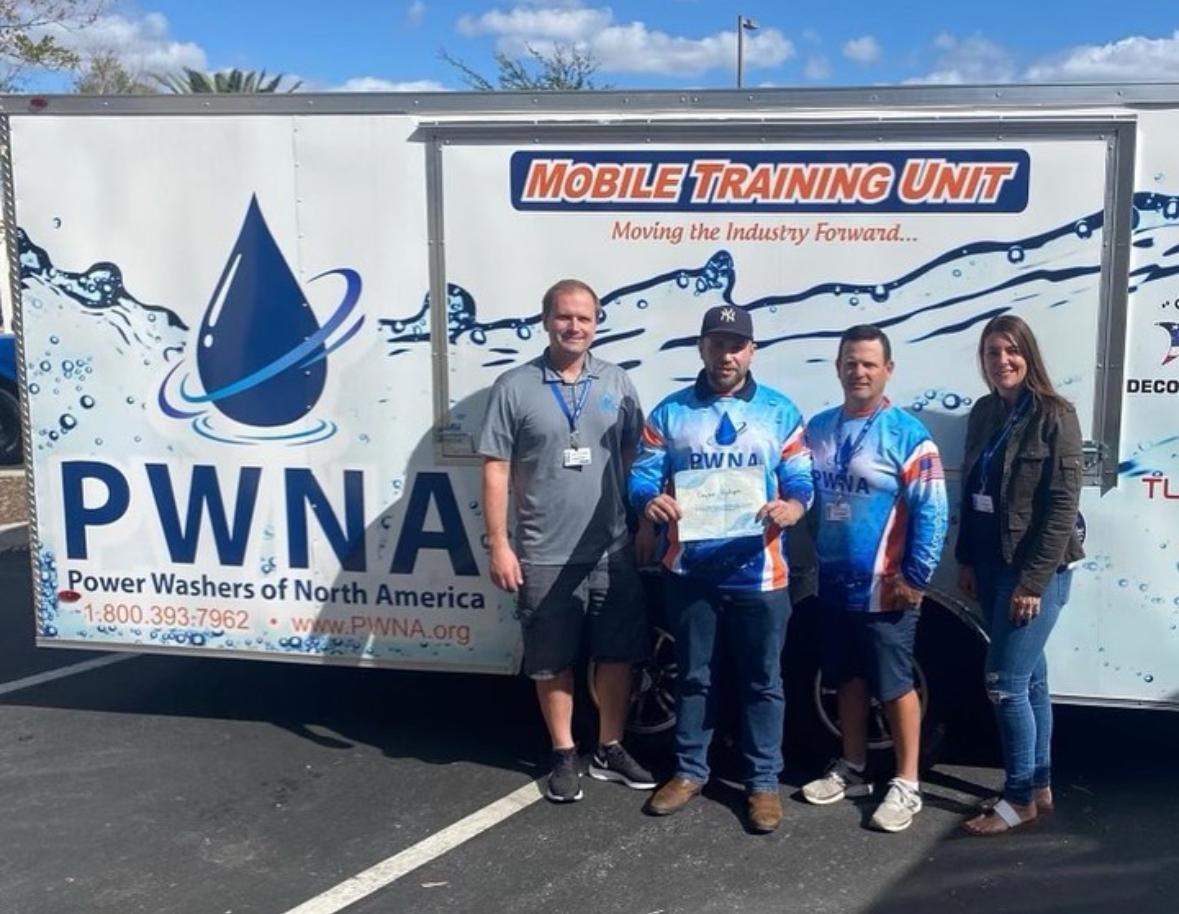
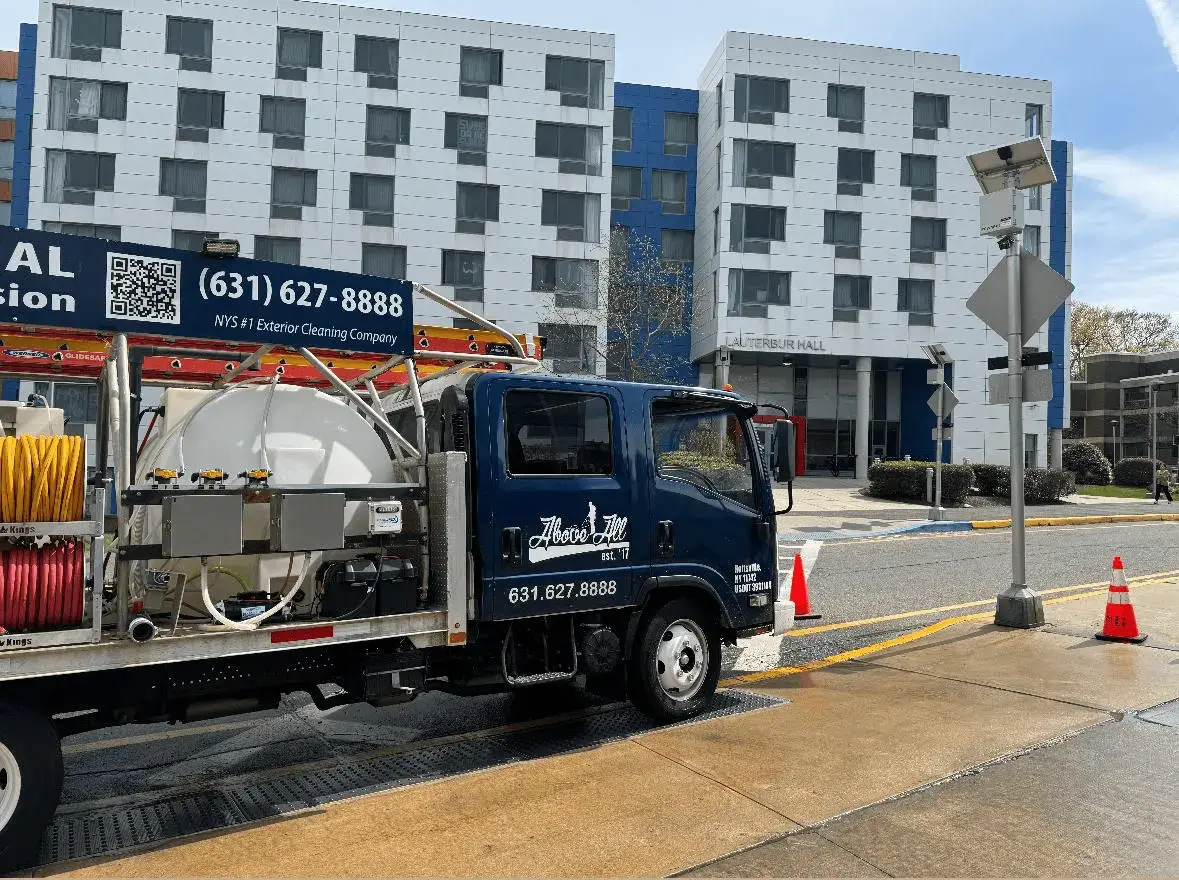
Above All Pressure Cleaning serves residential and commercial properties across Long Island including Holtsville, Hauppauge, Smithtown, Stony Brook, Dix Hills, Sayville, Babylon, and surrounding Suffolk and Nassau County communities. View all service locations.
For property managers with multiple assets or HOA boards managing community-wide programs, our property maintenance planning resources outline a complete spring exterior maintenance framework.
Solar panels are a long-term asset. Protect them accordingly.
📍 194 Morris Ave, Holtsville, NY 11742, Building 1, Suite 3
🌐 aboveallpressurecleaning.com/solar-panel-cleaning
Above All Pressure Cleaning provides commercial and residential exterior cleaning services across Long Island, NY — including solar panel cleaning, roof cleaning, house washing, gutter cleaning, and commercial pressure washing for HOA communities, property managers, and facility operators.