The full shaft, every hopper door and the compactor room — degreased, sanitized and documented, scheduled so the chute is never down when people need it.
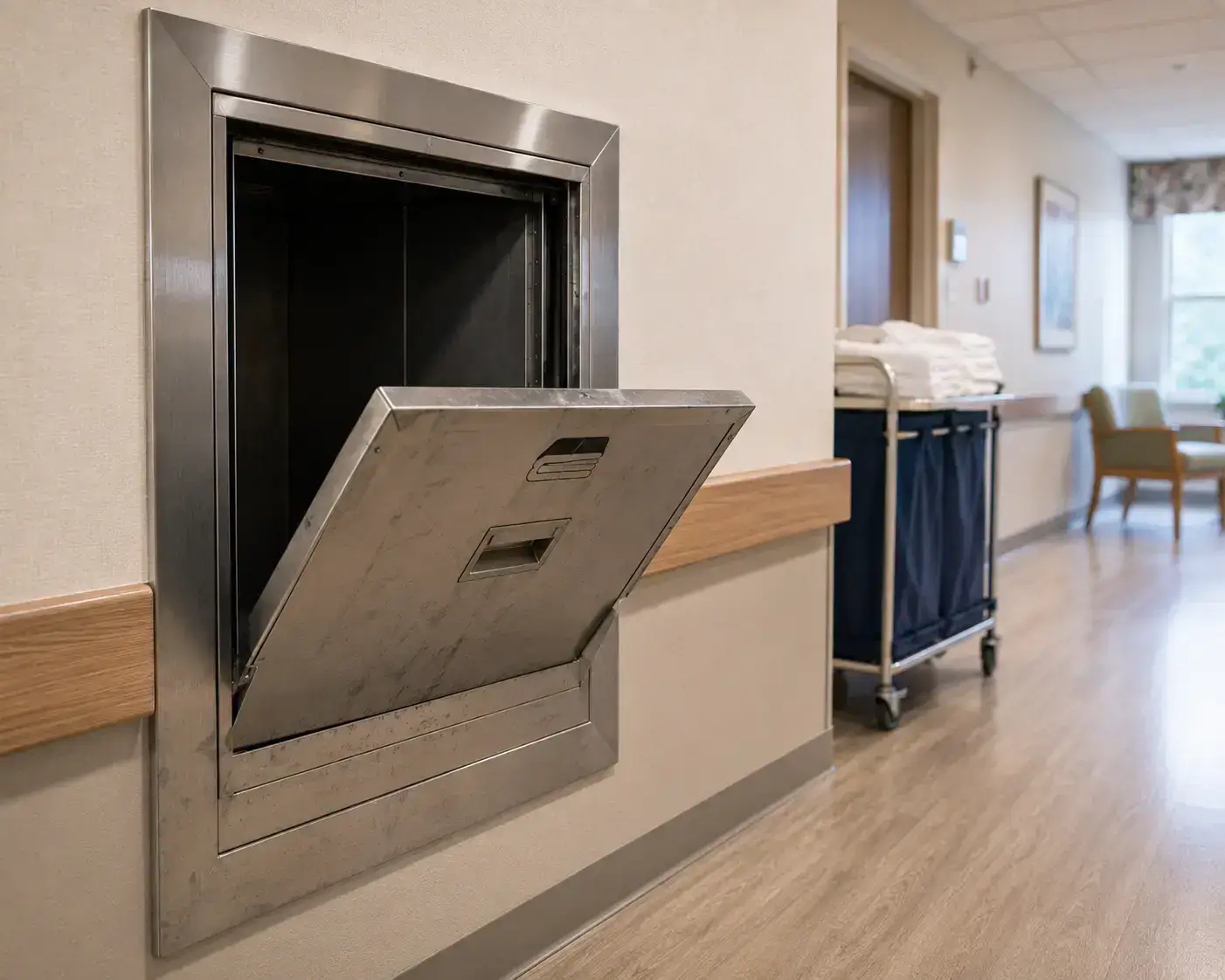
Most buildings can tell you when the boiler was last serviced. Far fewer can tell you when anyone last looked inside the chute.
Bags tear on the way down. Liquids leak. Over months the inside of the shaft builds a tacky film of food waste, grease and moisture that bacteria feed on and that holds odor the way a sponge holds water. A deodorizer block in the compactor room doesn’t touch it.
A coated chute is food and shelter in one place, and unlike a dumpster it runs straight to every floor. Roaches breed in the warm seams of the compactor room, flies follow the film, and mice and rats nest where waste sits undisturbed. You can treat the symptoms all year; if the source stays coated, they come back.
A chute is a shaft built to move air. Grease, paper and debris stuck to the walls add fuel to it, and intake doors that no longer latch let it reach the hallways. Keeping the shaft clean and the doors working is basic fire safety, not housekeeping.
It starts as one resident mentioning the smell on the 9th floor in July. Then it’s the managing agent, then the board, then an inspector or an infection-control auditor asking when the chute was last serviced — and nobody has a record.
In hospitals and care facilities, soiled linen moving down a shaft pushes air ahead of it. A residue-coated interior tears bags and undoes the controls your infection-prevention program depends on.
A rinse down the top opening isn’t a chute cleaning. A full service covers four zones.
A rotating spray head and degreaser run down the shaft from the top access point, repeated until the walls come clean, then a sanitizing pass. Sprinkler heads inside the shaft are worked around, not blasted.
Intake doors cleaned inside and out, frames, hinges and latches wiped down, and the floor and walls around each intake cleaned. Doors that stick or don’t latch get noted for your staff.
The chute termination, compactor room floor, walls and drains degreased; the compactor exterior and surrounds cleaned; bins, carts and totes washed. Usually the dirtiest part of the job.
Sanitizer on the shaft and doors, deodorizer after — not instead. Then a written record of what was serviced, when, and anything we found.
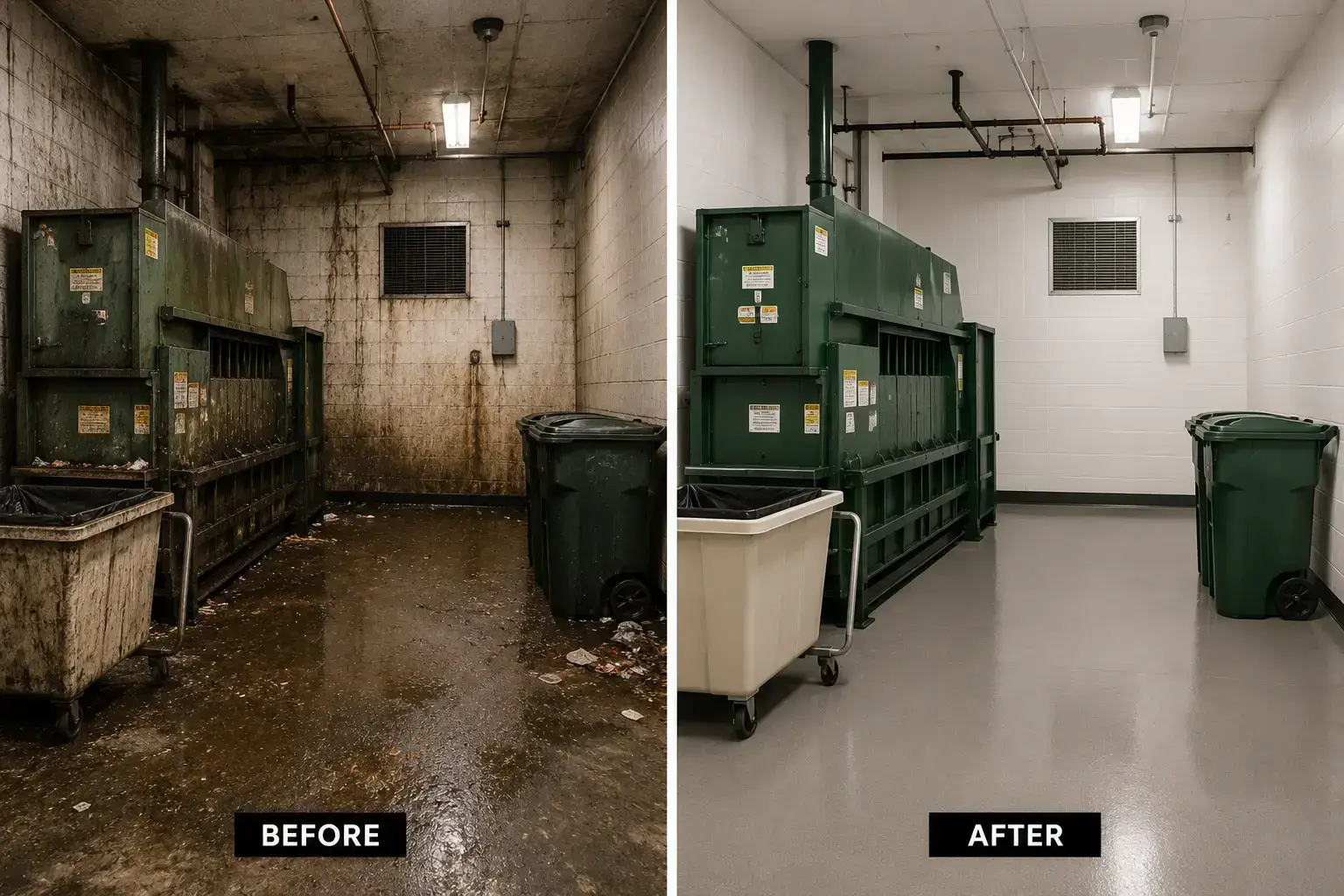
Compactor and collection room, before and after.
Cold water smears chute residue around instead of lifting it. Heat, agitation and the right degreaser are what break the film, and they’re why a proper cleaning takes hours rather than minutes.
The compactor room gets the same treatment. Floors that have been mopped around for years come back to the surface, drains get cleared of the sludge that feeds flies, and the bins stop smelling before they’re emptied.
01
We check every floor, the intake doors and the compactor room before anything gets wet, and flag doors that don’t latch or hinges that are failing.
02
Notices go up for residents or staff ahead of time. On the day, intake doors are secured on every floor and your super or engineer shuts the compactor down.
03
From the top access point, the spray head and degreaser work down the shaft in passes until the walls come clean.
04
Every intake door, frame and hopper room cleaned and wiped down, floor by floor.We check every floor, the intake doors and the compactor room before anything gets wet, and flag doors that don’t latch or hinges that are failing.
05
Discharge area, floor, walls, drains, bins and carts degreased and washed. Water kept off electrical, grease kept out of the drains.
06
Sanitizing and deodorizing pass, chute handed back, and a written service record for your files.
Chute work happens inside, so it can happen when the building is quiet. We plan the visit with whoever runs the building day to day.
| Interval | Typical buildings |
|---|---|
| Quarterly | High-volume hospitals, large nursing homes, any linen chute moving soiled textiles daily, and heavy-use high-rise rentals |
| Quarterly to twice a year | Mid-size care facilities, assisted living, surgical and dialysis centers, most co-op and condo buildings |
| At least annually | The minimum for any commercial or residential chute — a floor, not a target |
Two buildings the same size can need different schedules. A building reporting odor or pest activity between cleanings is telling you its interval is too long. Put it on a recurring commercial program and it stays a quiet, predictable line item.
Power washing my HOA common property. Gerard and Jeffrey used their high quality machines to power wash our pool house, entire pool area, sidewalks around the community, cobblestone curbs and mailboxes. They did a fabulous job. Above All will remain at the top of our list to fill our needs of the HOA.
— Verified Google review
243 Google reviews
Members of the Power Washers of North America — standards around method, insurance, environmental practice and wastewater handling.
COIs, written scope, completion records. Not something you have to chase.
Most exterior damage we’re called to fix was caused by cleaning. On old stone and older buildings, that judgment is the job.
We answer around the clock and schedule around your building, not ours. Family-run since 2014, 4.9 stars across 243 reviews.
National brands run procurement processes and hold their vendors to a standard. We’ve earned that work and kept it.






Entrances, ambulance bays and walkways, scheduled around clinical operations.
Building exteriors, common areas and amenity spaces for multi-family properties.
Degreasing and oil-stain removal for the garage under the building.
It depends on what the chute carries and how hard it works. Hospitals, large nursing homes and busy linen chutes usually need it quarterly. Mid-size care facilities and most apartment, co-op and condo buildings sit between quarterly and twice a year. Annually is the floor for any chute, not the target for a busy one. If odor or pests come back between cleanings, the interval is too long.
For a few hours, yes. Intake doors are locked on every floor while the shaft is wet and the compactor is off. We schedule it early in the morning or overnight, post notices for residents or staff beforehand, and hand the chute back in working order the same visit.
Yes, and it’s usually dirtier than the chute. The discharge area, compactor room floor, walls, drains and the bins or carts are part of a full service, not an add-on.
If the smell is coming from buildup in the shaft and the compactor room, removing the buildup is what removes the smell. A deodorizer on its own only covers it for a while. We degrease and sanitize first, then deodorize.
It removes the food and moisture they’re there for, which pest treatment alone can’t reach. Buildings that pair scheduled chute cleaning with their pest program get further than either one alone. In New York City, owners of buildings with three or more apartments are required under Local Law 55 to use integrated pest management, and sanitation is part of that.
Yes. Linen chutes move soiled textiles and push air ahead of them, so a residue-coated interior is an infection-control concern. We work around clinical operations and leave a service record for your infection-prevention and inspection files.
Yes — co-ops, condos and rentals in Brooklyn, Queens and Manhattan, as well as across Nassau and Suffolk. We coordinate with your super or building staff on lock-out and compactor shutdown, and with your managing agent on paperwork.
Yes. Certificates of insurance are issued before we arrive, and every visit comes with a written record of what was serviced and when, plus anything we noticed, such as an intake door that no longer latches.
Tell us the building, the number of floors and what the chute carries. We’ll come back within 24 hours with next steps.
We’ll be in touch within 24 hours. Urgent? Call 631-627-8888 — we answer around the clock.