
Brownstone stoops, limestone rows, storefront avenues and new towers on the water — every one of them wants a different hand.
Walk from the Slope down to the bay and you’ll pass four different kinds of building, each with its own way of going wrong.
Brownstone fronts, carved lintels and limestone rows that have been standing a century or more. They clean beautifully at low pressure and get ruined at high pressure — and a lot of them sit in historic districts where the city sets the limit.
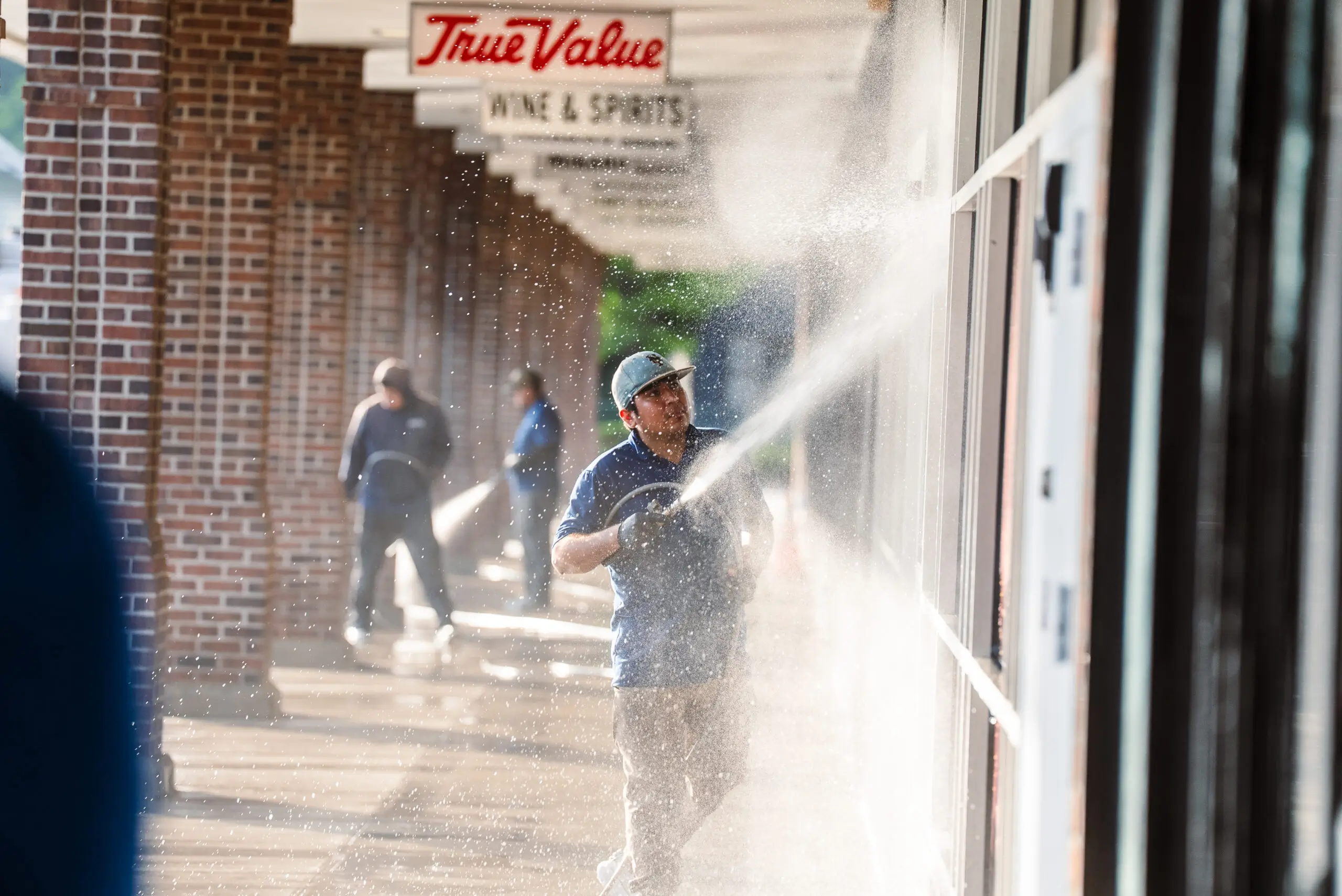
Fifth Avenue, Atlantic, 86th Street, Flatbush, Kings Highway. Grease from the restaurants, gum by the bus stop, the stain where the bags sit on collection night. Owners are on the hook for the sidewalk and 18 inches of gutter.
Williamsburg, Greenpoint, DUMBO and Downtown are full of new rental and condo towers — glass at street level, garages underneath, and a chute and compactor room in every one.
Downtown Brooklyn’s community district is due for the city’s on-street containers in fall 2026, with Crown Heights North and Prospect Heights to follow. Bins and bin areas stay cleaner when someone’s cleaning them.
Bed-Stuy, Bushwick and Prospect Heights are city rat mitigation zones. If your building is there, the trash room and compactor room are the first place to look.
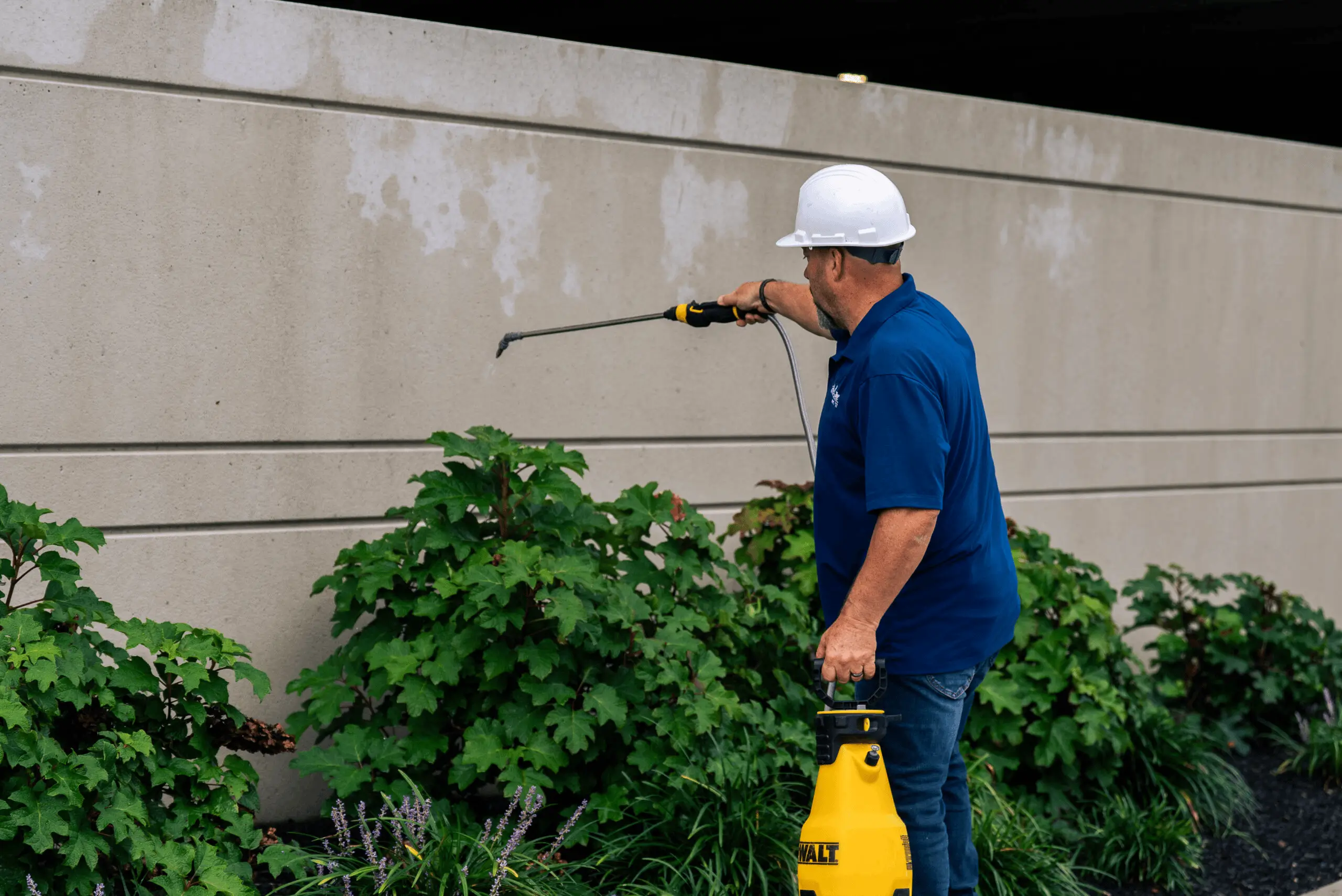
Brownstone is sandstone. Water behind the face makes it flake, and high pressure strips the surface off in an afternoon. Much of this stretch is landmarked, so pressure on masonry is capped at 500 psi and sandblasting is out.
What it needs: Low-pressure soft washing, a test patch first, stoops and ironwork treated as part of the front.
Rows of limestone and brownstone with deep stoops, iron fences and front-yard bin enclosures. Bed-Stuy is one of the city’s rat mitigation zones, so trash areas get attention.
What it needs: Gentle facade cleaning, bin enclosures and areaways degreased, rust off the stone below the railings.
Limestone rowhouses, brick semi-detached homes and the Shore Road co-ops, all taking salt air off the water. Come December, the Dyker Heights blocks are their own event.
What it needs: Salt film off brick and glass, co-op entrances and courtyards, driveways — and holiday lighting.
New rental and condo towers next to converted warehouses. Storefront glass at grade, garages below, a trash chute and compactor room in nearly every building.
What it needs: Chute and compactor-room cleaning, garage degreasing, storefront and sidewalk maintenance.
Warehouses, loading docks and converted industrial buildings with heavy truck traffic. Oil on the aprons, grime on the dock plates and walls nobody has looked at in years.
What it needs: Loading dock and apron degreasing, building washing, graffiti removal.
Detached and semi-detached homes with driveways, siding and yards — the most Long Island part of Brooklyn, with salt off Jamaica Bay and Sheepshead Bay on top.
What it needs: House washing, roof and gutter cleaning, driveways and pavers, salt and rust removal.
18
in.
City rules make owners responsible for the sidewalk and 18 inches into the street. A broom handles litter; it doesn’t handle grease, gum or the stain under the bins.
500
psi
On landmarked buildings and in historic districts, the Landmarks Preservation Commission caps water pressure on masonry at 500 psi and bans sandblasting outright.
300
psi
Cast-iron facades get an even lower 300 psi limit. Most of the damage we see on old fronts came from someone ignoring both.
3+
units
Under Local Law 55, owners of buildings with three or more apartments must use integrated pest management — and sanitation of trash areas is part of it.
Brownstone and limestone fronts, soft washed · Stoops, steps and areaways · Iron railings, fences and gates · Rust and calcium staining on stone · Rear yards and garden walls
Co-op, condo and rental building fronts · Sidewalk and gutter line · Storefront glass, gates and awnings · Gum and grease removal · Trash chutes and compactor rooms · Garages and loading docks
House washing · Roof cleaning · Gutter cleaning and brightening · Driveways, patios and pavers · Salt film and rust removal
Brooklyn has more soft stone per block than anywhere we work. Brownstone, limestone and old brick all clean up with detergent, dwell time and low pressure. Pressure is the last tool we pick up, not the first.
We test a small, out-of-the-way patch before we do a whole front, keep within the 500 psi the Landmarks Preservation Commission allows on masonry, and keep runoff out of the catch basin at the curb.
| Property | Typical Rhythm |
|---|---|
| Storefront sidewalks | Monthly to quarterly on a busy avenue; more often next to food |
| Brownstone and limestone fronts | Every two to three years, gently; stoops yearly |
| Building entrances and courtyards | Once or twice a year |
| Trash chutes and compactor rooms | Quarterly to twice a year in busy buildings; at least annually |
| Houses by the bay | House washing yearly; gutters twice a year; roofs every two to three years |
Rather have it handled? A commercial program or residential membership puts it on a schedule.
Soft washing and detergents before pressure, a test patch before a whole facade, and pressure kept inside the limits the city sets for old stone.
Accountable to the Power Washers of North America on method, insurance and wastewater — which matters when the catch basin is ten feet from the work.
Access, water, lock-outs and notices with the people who run the building; COIs and written scope for the office.
4.9 stars across 243 Google reviews, and a phone that gets answered at any hour.
Bayside to the Rockaways, LIC to Forest Hills.
Pre-war co-ops, cast iron and storefront blocks.
How we work in the city, and the rules we work to.
Yes, but not with a pressure washer turned up. Brownstone is a soft sandstone; too much pressure takes off the face and lets water into the stone, and it starts to flake. We use low pressure and the right detergent, test a small patch first, and keep the stoop, cornices and ironwork in mind the whole time.
Cleaning a building in a historic district — Park Slope, Fort Greene, Clinton Hill, Brooklyn Heights, parts of Bed-Stuy and Crown Heights and others — is work the Landmarks Preservation Commission reviews. It caps water pressure on masonry at 500 psi and bans sandblasting. We can give you the method and product details the application asks for.
Yes. Stoops get cleaned with the same care as the front they belong to, and iron railings and fences are cleaned without stripping the paint. Rust bleeding onto the stone is treated separately.
Yes. Storefront glass, gates, awnings and the sidewalk out to the gutter line, done before your shift starts so customers never see the hoses.
Yes, and that’s the same work we do every day on Long Island — siding, roofs, gutters, driveways and pavers, with extra attention to salt off the bay.
Yes — the full shaft, the hopper doors on every floor and the compactor room, scheduled early in the morning with your super.
We do holiday lighting — design, install, take-down and storage. If you’re on one of those blocks, call early; December books up.
Tell us the building, the block and what needs cleaning. We’ll come back within 24 hours.
We’ll be in touch within 24 hours. Urgent? Call 631-627-8888 — we answer around the clock.