
Detached homes in Bayside, garden co-ops in Jackson Heights, towers in LIC and storefronts under the 7 — Queens is the borough that looks most like home to us.
Cross the line at Little Neck and nothing much changes at first. Keep going west and you’re in some of the densest blocks in the city.
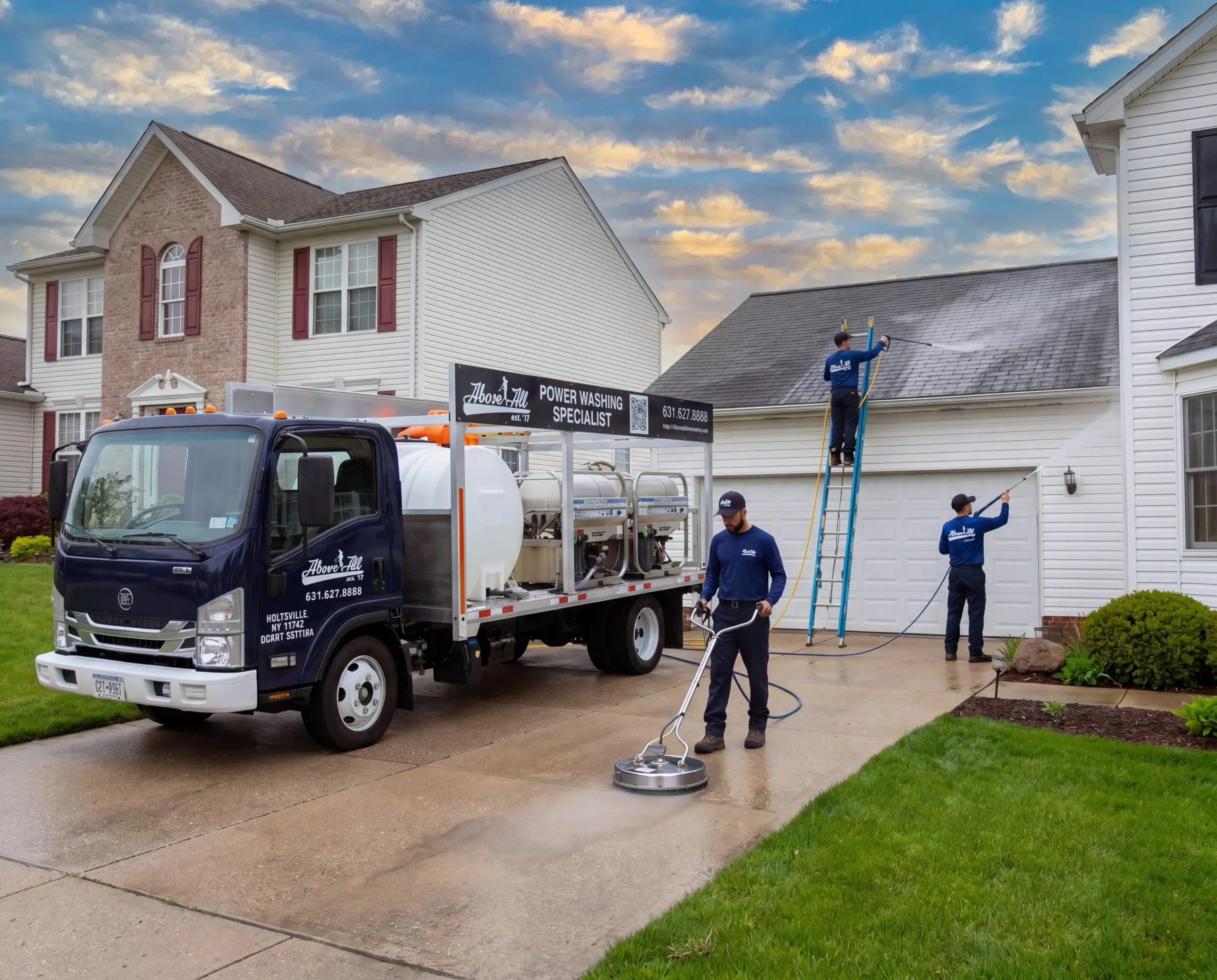
Bayside, Douglaston, Little Neck, Whitestone and Fresh Meadows are detached homes with yards, mature trees and driveways. Algae on the north side, black streaks on the roof and full gutters every fall — the same story we deal with every day in Great Neck and Manhasset.
Jackson Heights and Sunnyside Gardens were built as garden apartments around shared green space, and both are historic districts. Forest Hills Gardens is a private community of Tudor fronts and tile roofs. Gentle methods aren’t optional here.
Long Island City’s Court Square and Hunters Point, and downtown Flushing, are full of new towers — garages, glass and a trash chute in every building. LIC, Sunnyside and Woodside are due for the city’s on-street trash containers by the end of 2027.
Howard Beach, Broad Channel and the Rockaways take salt and sand off Jamaica Bay and the Atlantic, and Whitestone and Douglaston sit on the Sound side.
Our founder has worked with the Queens Chamber of Commerce. Queens has never felt like a trip into the city to us — it’s the next town over.
Vinyl, stucco, brick and Tudor homes under mature trees, some looking out on Little Neck Bay. Shade keeps the north side damp, the trees fill the gutters and the roofs streak.
What it needs: House washing, roof and gutter cleaning, driveways and pavers — often on a yearly schedule.
Half-timbered fronts, stucco, slate and clay tile roofs and brick paths. The Gardens is a private community with its own standards, and these materials punish high pressure.
What it needs: Soft washing only, plantings protected, gentle roof treatment.
Brick garden-apartment buildings set around planted interior gardens, in two of the borough’s historic districts. Shaded courtyards grow algae on the paths and steps.
What it needs: Courtyard paths and steps, building fronts and entrances, beds covered and rinsed.
Glass towers at Court Square and Hunters Point; brick rowhouses with awnings in Astoria; retail on Steinway, Ditmars and 30th Avenue.
What it needs: Chute and compactor-room cleaning, garage degreasing, storefront and sidewalk care.
Dense retail and restaurant blocks, some under the elevated 7. Grease from kitchens, gum, and grime and droppings from the el above.
What it needs: Early-morning sidewalk degreasing to the gutter line, storefront glass and gates.
Homes and small buildings close to Jamaica Bay and the ocean, many re-sided and rebuilt after Sandy. Salt film on everything and rust on every railing.
What it needs: Salt and rust removal, house washing, decks and boardwalk-side concrete.
18
in.
City rules make owners responsible for the sidewalk and 18 inches into the street. A broom handles litter; it doesn’t handle grease, gum or the stain under the bins.
500
psi
On landmarked buildings and in historic districts, the Landmarks Preservation Commission caps water pressure on masonry at 500 psi and bans sandblasting outright.
300
psi
Cast-iron facades get an even lower 300 psi limit. Most of the damage we see on old fronts came from someone ignoring both.
3+
units
Under Local Law 55, owners of buildings with three or more apartments must use integrated pest management — and sanitation of trash areas is part of it.
House washing for siding, stucco and brick · Roof cleaning and black streak removal · Gutter cleaning and brightening · Driveways, patios and pavers · Salt film, rust and calcium removal
Building fronts and entrances · Courtyards, paths and steps · Trash chutes and compactor rooms · Bin areas and enclosures · Garages under the building
Sidewalk degreasing and gum removal · Storefront glass, gates and awnings · Graffiti removal · Parking lots and garages · Loading areas
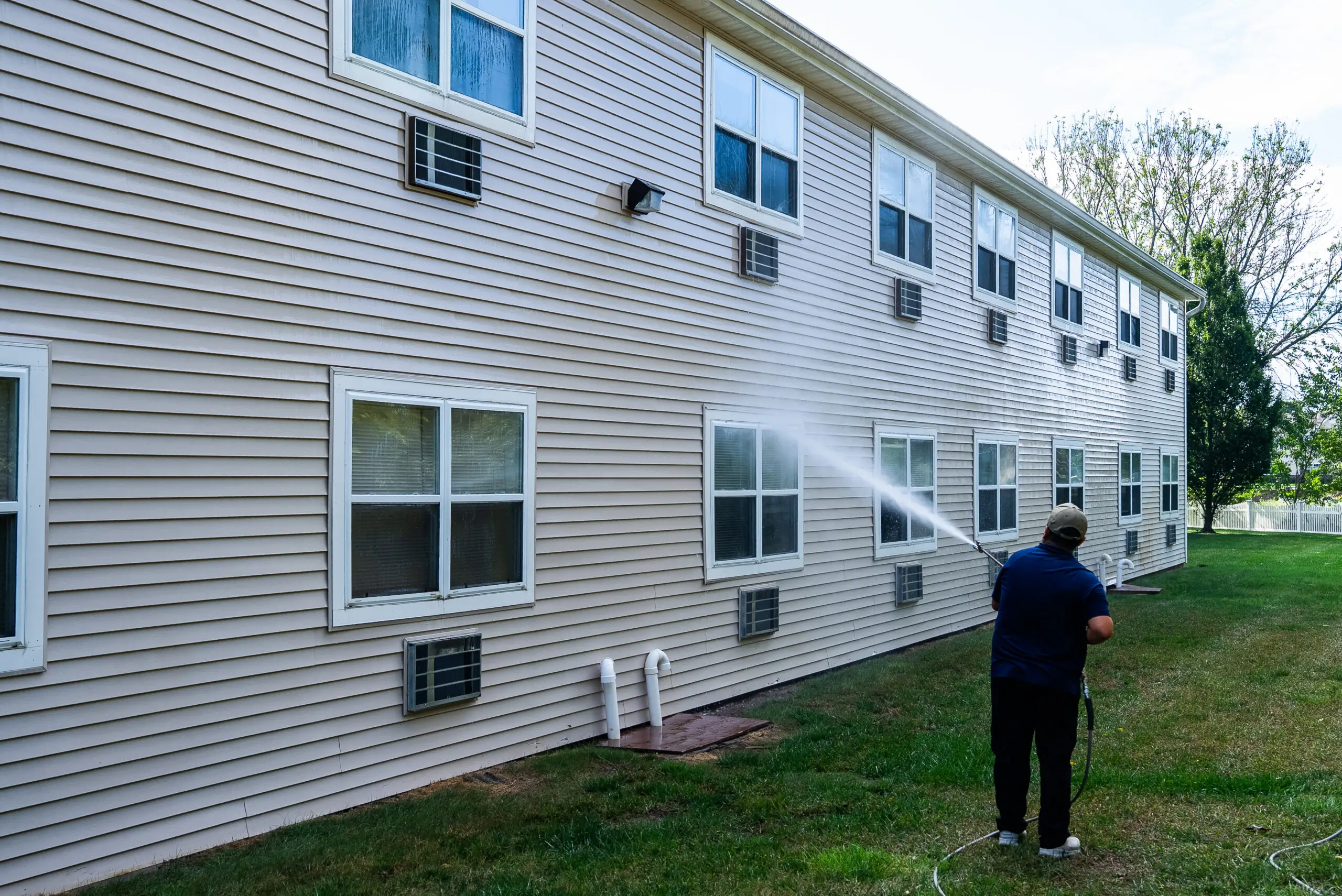
Siding, stucco, roofs and painted surfaces get soft washed — low pressure, professional cleaning solutions, the chemistry doing the work. Concrete, sidewalks and garage floors get the pressure they can take.
On historic garden co-ops and anything in a historic district, we start gentler still: a test patch first, masonry kept inside the 500 psi the city allows, and the plantings treated like they’re part of the building, because they are.
| Property | Typical Rhythm |
|---|---|
| Detached homes | House washing yearly or every other year; gutters twice a year; roofs every two to three years |
| Garden co-op courtyards | Paths and steps once or twice a year; fronts every few years |
| Busy retail sidewalks | Monthly to quarterly; more often under the el or next to food |
| Trash chutes and compactor rooms | Quarterly to twice a year in busy buildings; at least annually |
| Bay and ocean-front homes | Yearly, at minimum — salt works fast |
Homeowners can put it on autopilot with our residential membership, from $39 a month. Buildings run on a commercial program.
Soft washing and detergents before pressure, a test patch before a whole facade, and pressure kept inside the limits the city sets for old stone.
Accountable to the Power Washers of North America on method, insurance and wastewater — which matters when the catch basin is ten feet from the work.
Access, water, lock-outs and notices with the people who run the building; COIs and written scope for the office.
4.9 stars across 243 Google reviews, and a phone that gets answered at any hour.
Right across the line — Great Neck, Manhasset and beyond.
Brownstones, storefront avenues and houses by the bay.
Pre-war co-ops, cast iron and storefront blocks.
Exactly the same way. Northeast Queens sits right on the Nassau line, and a house in Bayside or Little Neck needs what a house in Great Neck needs: soft washing for the siding, the roof and gutters looked after, the driveway and pavers cleaned.
Yes. Garden co-ops in Jackson Heights and Sunnyside are built around their plantings. Beds are pre-wet and covered, solutions are biodegradable, and everything gets rinsed afterward. Paths, steps and building fronts get cleaned at the pressure the surface can take, not more.
Yes. Under the elevated lines on Roosevelt Avenue and elsewhere, sidewalks collect grime and droppings from above on top of the usual grease and gum. We degrease and clean out to the gutter line, early, before the street gets busy.
Yes. Salt and sand off Jamaica Bay and the ocean coat siding, glass and railings and keep surfaces damp. Plenty of homes there were re-sided after Sandy; that siding stays looking new longer with a regular wash and the salt film taken off.
Yes — the full shaft, every hopper door and the compactor room, scheduled early in the morning with your super. It suits the newer towers in Long Island City and downtown Flushing especially.
Yes. The Gardens is a private community with its own standards, and its Tudor fronts, stucco and tile roofs want gentle handling anyway. We soft wash, protect the plantings and keep to whatever the community asks.
Queens is next door to Nassau, so it’s one of the easier trips we make. Call 631-627-8888 and we’ll give you a date.
Tell us about the house or the building and we’ll come back within 24 hours.
We’ll be in touch within 24 hours. Urgent? Call 631-627-8888 — we answer around the clock.