Paver sealing on Long Island is one of the easiest line items to push to next year. The walkway still functions, the paving stones still look presentable, and there is always a more urgent repair competing for the same budget. That is exactly how a routine clean-and-seal turns into a reset-and-replace two winters later. Preventive maintenance on pavers is unglamorous work. It is also a fraction of the cost of the damage it prevents, and the gap between those two numbers widens every season you wait.
What sealing a paver surface actually does
Most people think of sealer as a finish, the thing that makes pavers look wet and rich. That is the least important thing it does on a commercial property.
The real work happens in the joints. A paver surface is not held together by adhesive. It holds together because sand packed between the stones creates friction that spreads load and keeps each paver from moving. Lose that joint sand and the whole system loosens. Rain, foot traffic, plow blades, and even routine cleaning pull sand out of the joints a little at a time. Joint sand erosion is the single most common reason paver surfaces fail.
Sealing addresses that directly. A joint-stabilizing sealer penetrates the sand and binds it in place so it stops washing out. At the same time it does the things people expect: resists oil and leaf-tannin staining, slows UV fade, and cuts how much water the pavers absorb. On a surface people cross every day, a good sealer also improves traction, which carries more weight on a commercial site than a backyard patio.
So the question is not really whether the pavers could look better. It is how long you want this surface to stay a surface.
The deferred-maintenance chain, one step at a time
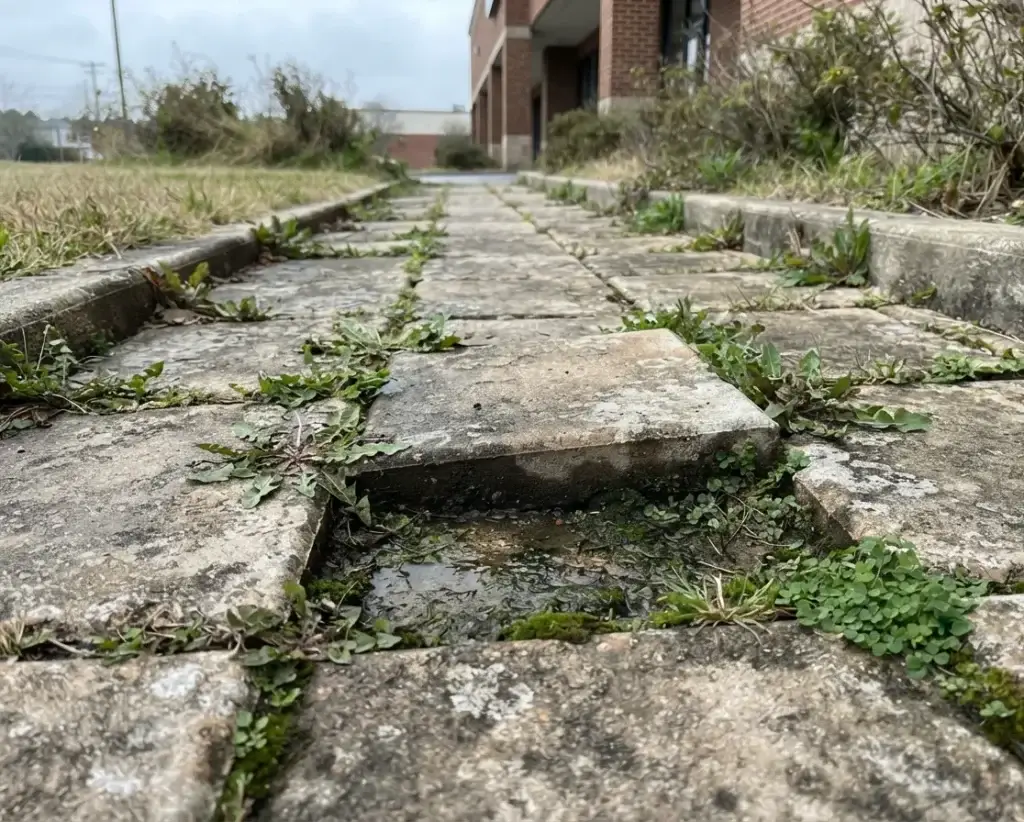
Skipping paver maintenance does not cause one problem. It starts a sequence, and each step is more expensive than the last.
It begins with joint sand washing out. Then the pavers start to move, because the friction holding them is gone. Moving pavers open wider joints, which lets in more water and more weed seed, so now there are weeds and ants in the gaps and standing water where the surface has dipped. Uneven, rocking pavers become trip hazards, and on a commercial property a trip hazard is a liability claim waiting for a name. Meanwhile the unsealed surface has been soaking up oil, rust, and organic stains that no longer come out.
By the end of that chain you are not cleaning and sealing anymore. You are pulling up sections, re-leveling the base, replacing cracked stones, and re-laying the field. A crew can clean, re-sand, and seal a plaza in a day or two. Resetting that same plaza after it has failed is a different project with a different price tag.
That is the whole argument for doing the boring version on a schedule.
Long Island is hard on pavers
This is where local conditions matter, and where most of the generic advice online falls short.
Long Island runs through dozens of freeze-thaw cycles between November and March. Water works into the paver surface and the joints, freezes, expands, and pries everything apart a little more each time. Then the de-icing salt arrives. Road salt and ice-melt are hygroscopic, which means they pull moisture into the surface and hold it there. That increases the number of freeze-thaw cycles the pavers go through and speeds up surface scaling and spalling. Unsealed pavers take the full force of it. Add the coastal salt air that sits on everything near the water year round, heavy leaf tannins in the fall, and humid summers that grow algae and moss in shaded joints, and you have a climate working on hardscape from several directions at once.
A quality sealer will not make any of that disappear. What it does is slow salt and water penetration so the surface has a fighting chance through winter. That is why sealing is worth doing before the first freeze, not after the damage shows up in spring.
Clean and re-sand first, because you cannot seal over the problem
This is where corners get cut, and where the job really lives.
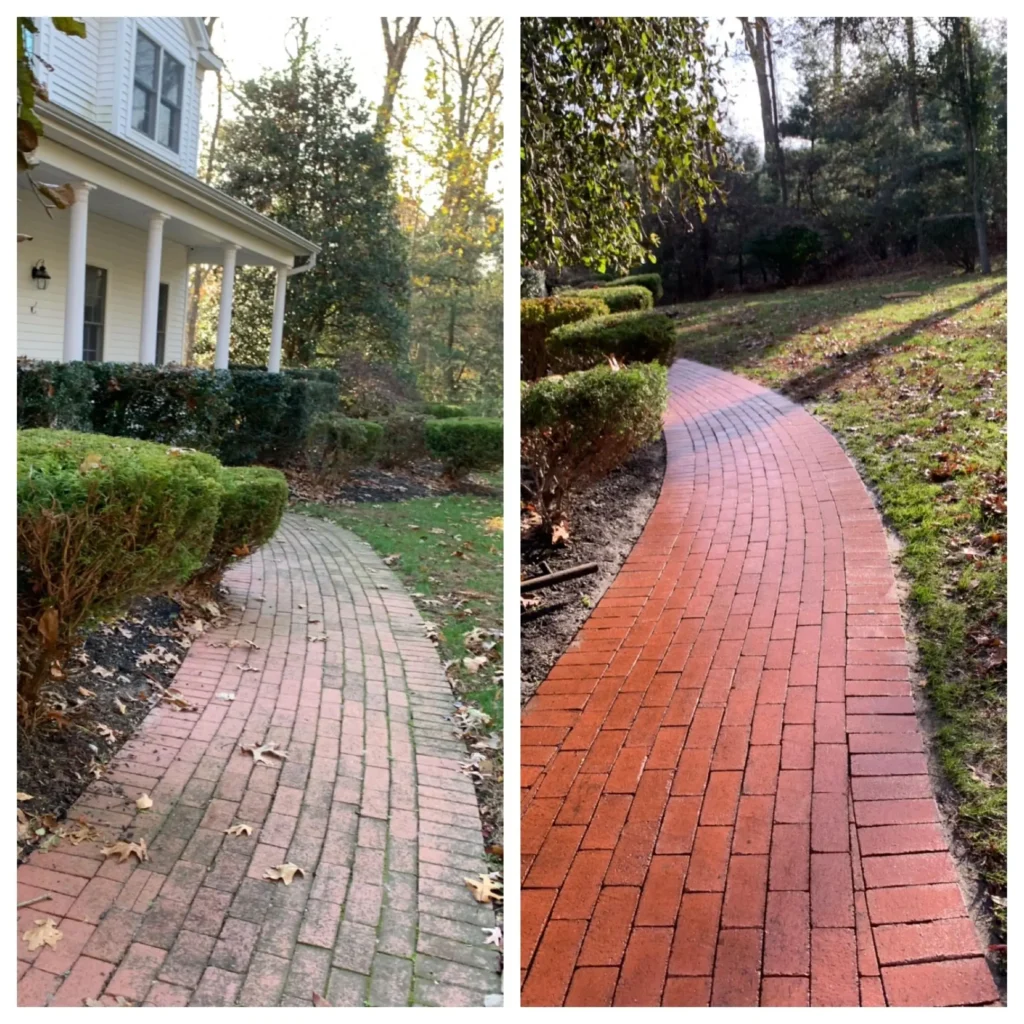
You cannot seal a dirty or failing paver surface and expect it to hold. Sealing traps whatever is underneath, so old failing sealer, ground-in grime, moss in the joints, or efflorescence hazing the stones all has to come off first. The right sequence is to deep-clean the pavers, clear any weeds or moss, remove stains, and let the surface dry fully. Then the joints get re-sanded, because years of erosion have left them low, and only then does the sealer go down. Proper paving stone cleaning is not a preliminary step you can skip. It is half the reason the finished job lasts.
Product choice matters too. For tight joints, a joint-stabilizing sealer locks the sand and protects the surface in one system. For wider joints, polymeric sand holds up better and gets sealed over. Getting that decision right, along with the weather window, is the difference between a seal that lasts years and one that peels by spring. That combined paver sanding and sealing process is what protects the investment, not a quick spray of sealer over whatever is already there.
Where this matters most on commercial properties
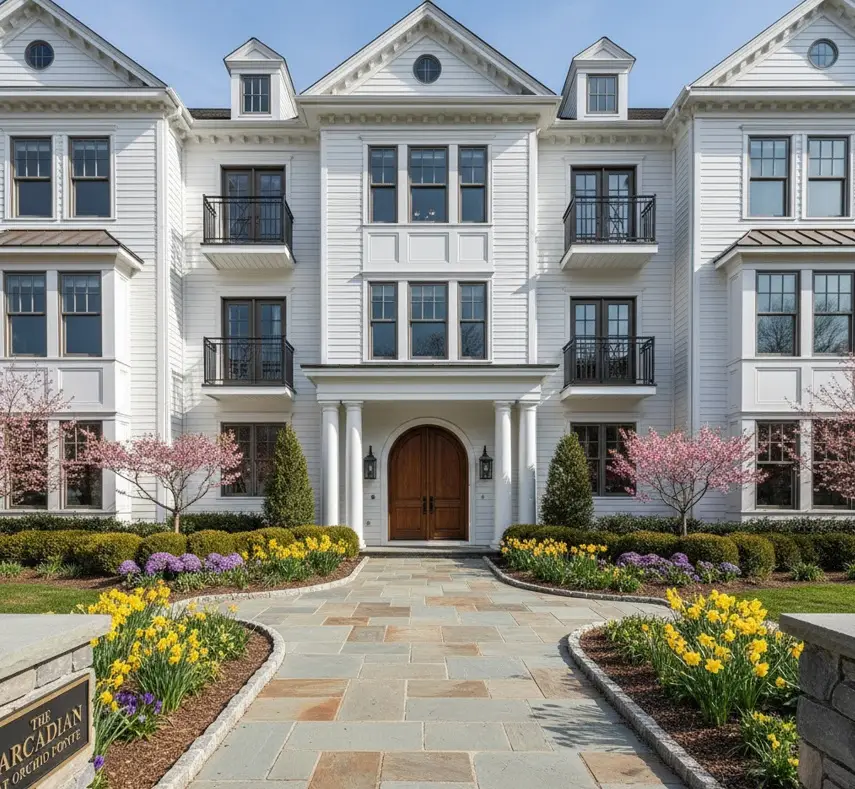
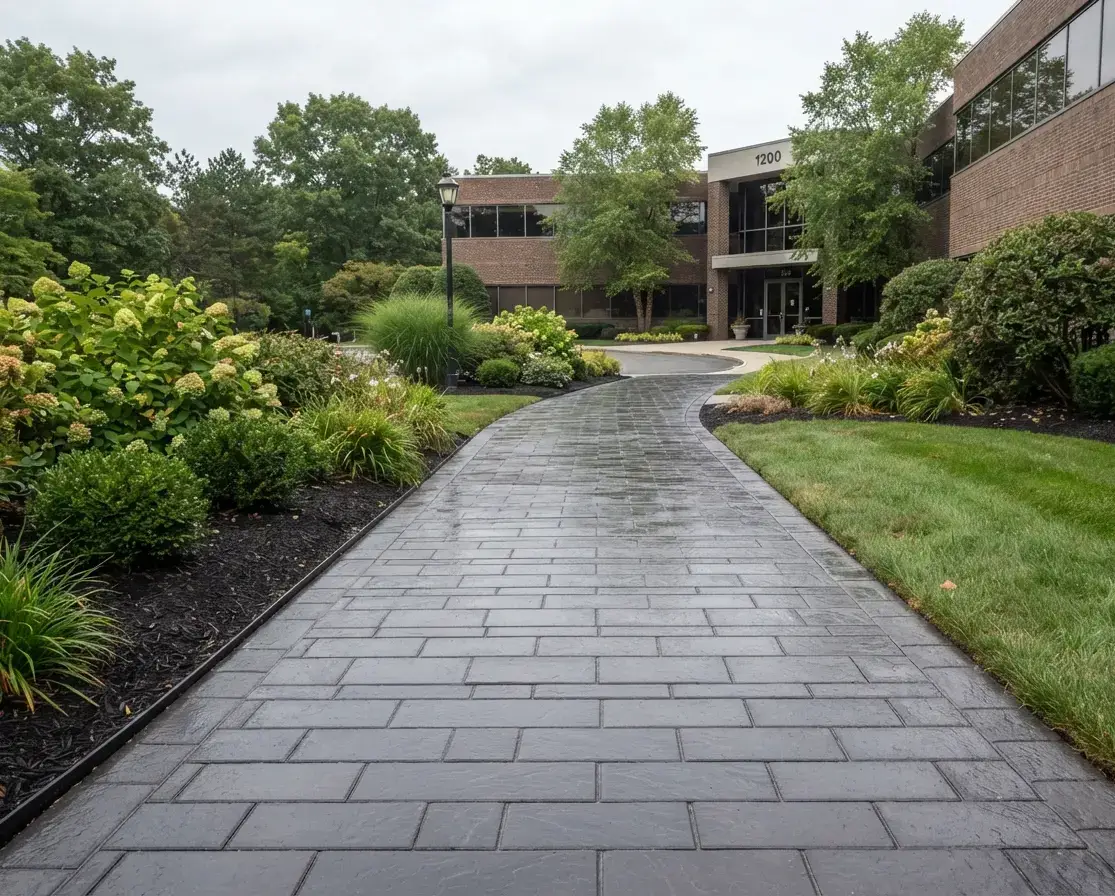
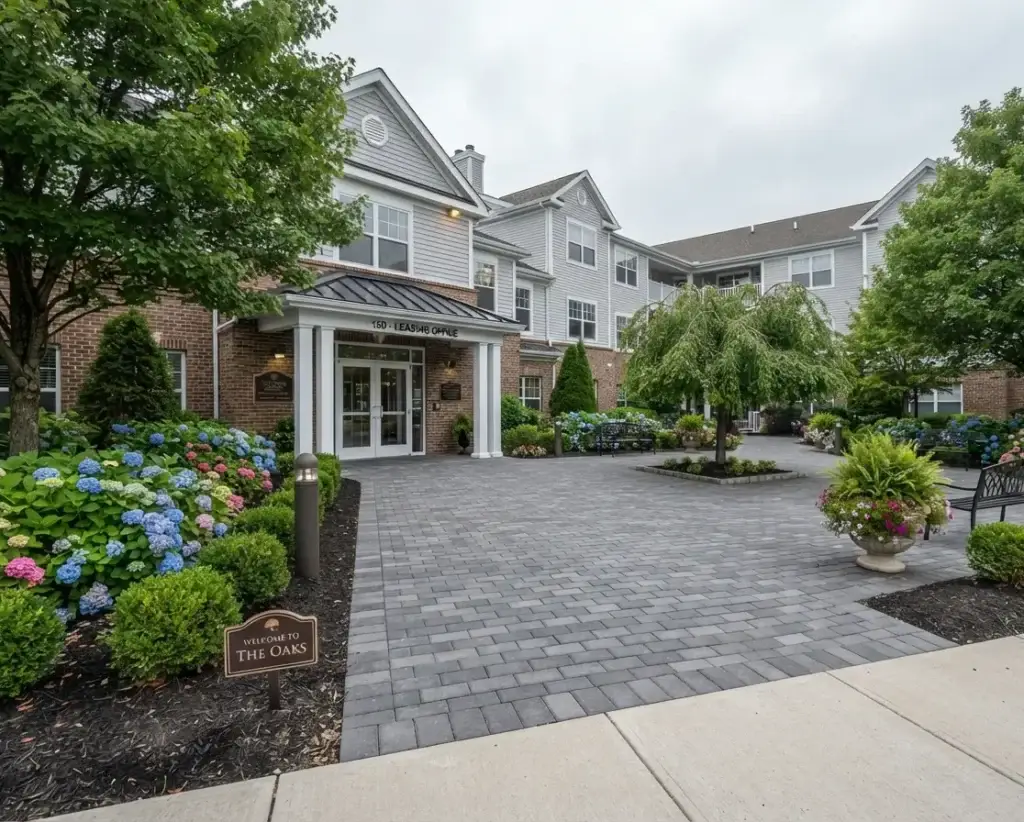
Pavers show up on the highest-visibility, highest-traffic parts of a commercial site. Courtyards and walkways in apartment and HOA communities, pool decks, retail plaza entrances, hotel and restaurant approaches, campus paths. These are the surfaces residents, tenants, and customers walk across, and they are exactly where a shifting, weed-filled, stained paver field does the most damage to both safety and perception.
For an HOA board, a failing walkway is a resident complaint and a liability exposure at the same time. For a retail or hospitality property, a stained, uneven entrance is the first thing a customer registers before they reach the door. Preventive sealing keeps those surfaces safe underfoot and presentable, which is the outcome the property is paying for.
Timing it on an occupied site
The catch with sealing is that it needs dry, mild conditions and cure time, and commercial sites do not stop operating while you work. Sealing wants a dry surface, a dry forecast, and temperatures that are still mild, which on Long Island points to early fall as the last clean window before winter. The work also has to be staged so sections stay closed long enough to cure without shutting down an entrance or a walkway people depend on.
That is a scheduling problem more than a cleaning problem, and it is why this kind of work belongs on a planned maintenance calendar rather than an emergency call. Booked ahead, it is routine. Booked after the pavers have started to move, it is damage control.
FAQ
How often should commercial pavers be sealed?
Most commercial paver surfaces need resealing every few years, with the exact interval depending on traffic, sun exposure, and the sealer used. High-traffic entrances and areas that get salted every winter fall on the shorter end. The practical answer is to seal on a set schedule rather than waiting for the surface to look worn out.
Is fall a good time to seal pavers on Long Island?
Early fall is one of the best windows. The surface needs dry, mild weather to cure, and sealing before the first freeze puts a barrier in place ahead of the winter salt and freeze-thaw cycles that do the most damage. Waiting until it turns cold works against the application.
Do you really have to clean pavers before sealing?
Yes. Sealing locks in whatever is on the surface, so dirt, old failing sealer, moss, and stains all have to be removed first, and eroded joints re-sanded. Sealing over a dirty surface is how you get a finish that fails within a season.
Does sealing pavers reduce trip hazards?
Indirectly, yes. Sealing stabilizes the joint sand that keeps pavers from shifting, and shifting, rocking pavers are the main cause of trip hazards on a paver surface. Stable joints keep the surface even underfoot.
Will road salt damage unsealed pavers?
It can, and on Long Island it usually does over time. De-icing salt pulls moisture into the surface and increases freeze-thaw stress, which leads to scaling and spalling on unsealed pavers. A sealer slows that penetration and buys the surface years.
The takeaway
The math on paver sealing is not complicated. A clean-and-seal on a schedule is a known, modest cost. A failed paver field is an unpredictable and much larger one, and every winter you defer the first pushes you closer to the second. Preventive maintenance is not the exciting line on the budget, but it is the one that keeps the expensive line from showing up later.
If you manage a commercial property on Long Island with paver walkways, courtyards, or entrances, the most useful thing you can do before this winter is get them on a maintenance schedule instead of a repair list. The surfaces you protect this fall are the ones you will not be resetting a few years from now.