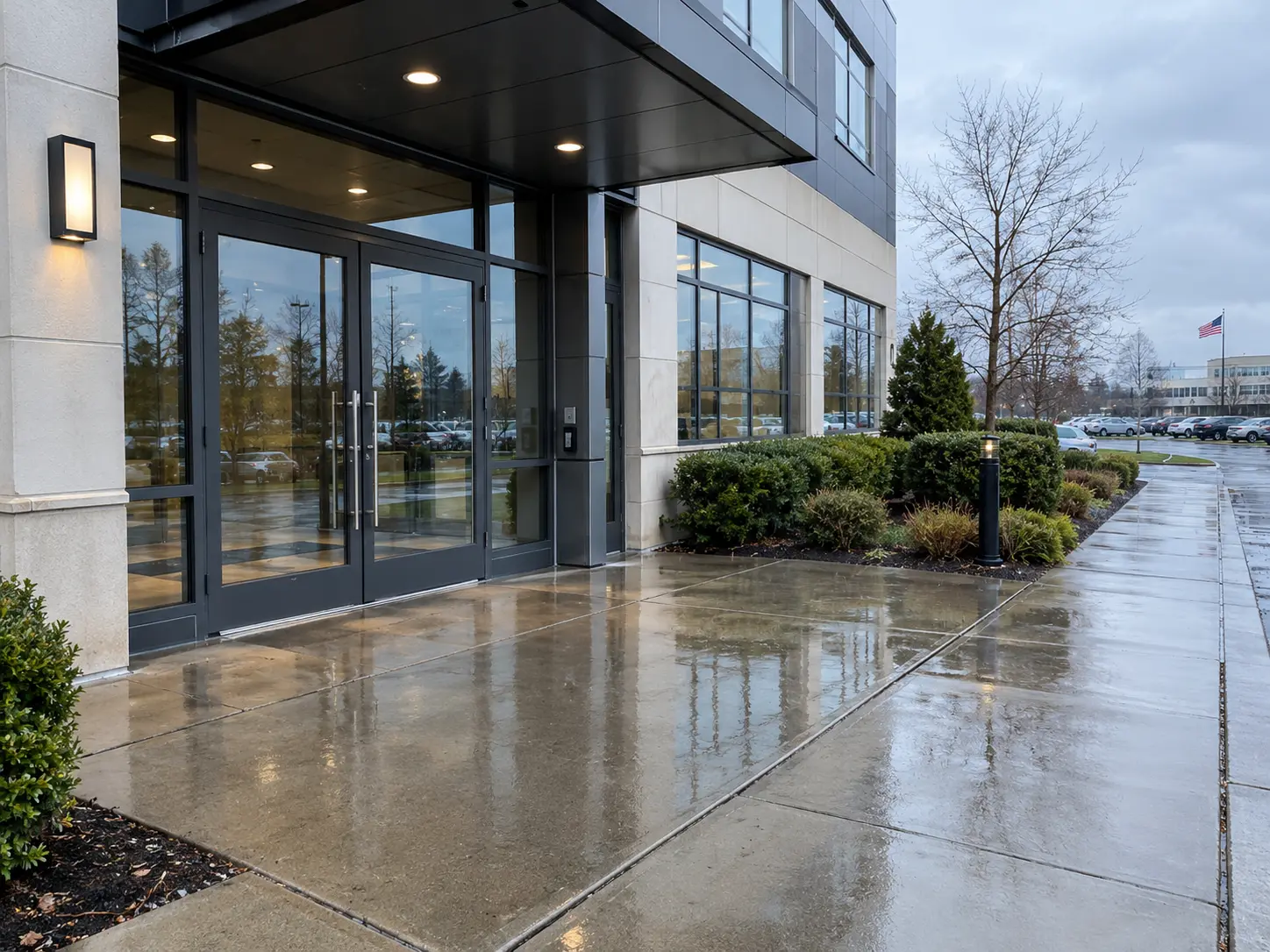
Most property managers worry about two kinds of lawsuits: a slip-and-fall claim and an ADA complaint. They are not the same thing, and treating them as one problem is how both get handled badly. This piece is about commercial slip-and-fall liability in New York, because that is the exposure your exterior conditions directly create and the one routine maintenance can actually reduce. We will cover how ADA accessibility claims differ at the end, since they come up in the same conversation.
The short version: in New York, a slip-and-fall case rarely turns on the fact that someone fell. It turns on whether you should have dealt with the condition that caused it.
What a New York slip-and-fall claim actually turns on
New York property owners, managers, and tenants in control of a space have a legal duty to keep it reasonably safe for the people lawfully on it. For a business open to the public, the customers and tenants walking your property are owed a high standard of care.
The central question in almost every case is notice. Did you know about the dangerous condition, or should you have known about it, and did you fail to fix it in a reasonable time? Actual notice is straightforward: someone reported the slick spot and nothing happened. Constructive notice is the one that catches property owners off guard. If a hazard existed long enough that a reasonable inspection would have found it, the law can treat you as if you knew. A puddle that appeared two minutes before a fall is hard to pin on you. A patch of algae that has been spreading across a shaded walkway for months is not.
New York also follows pure comparative negligence, which means an injured person can recover even if they were partly at fault for their own fall. The visitor being careless does not erase your share of the responsibility. It only reduces it.
That framework is why the condition of your walking surfaces matters so much. The recurring, visible, slowly-developing hazards are exactly the ones that build a case against you.
The exterior conditions that quietly build the case against you
The hazards that create the most slip-and-fall exposure on commercial properties are not dramatic. They develop in plain sight over weeks.
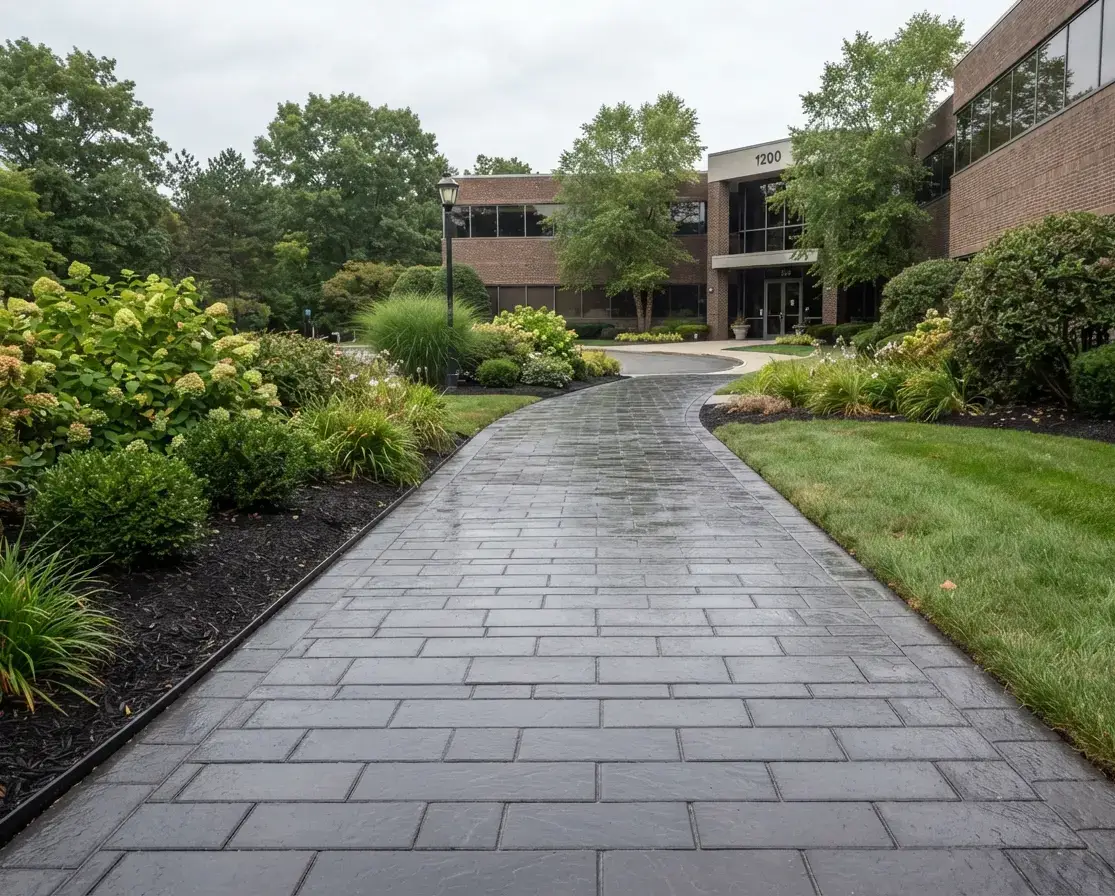
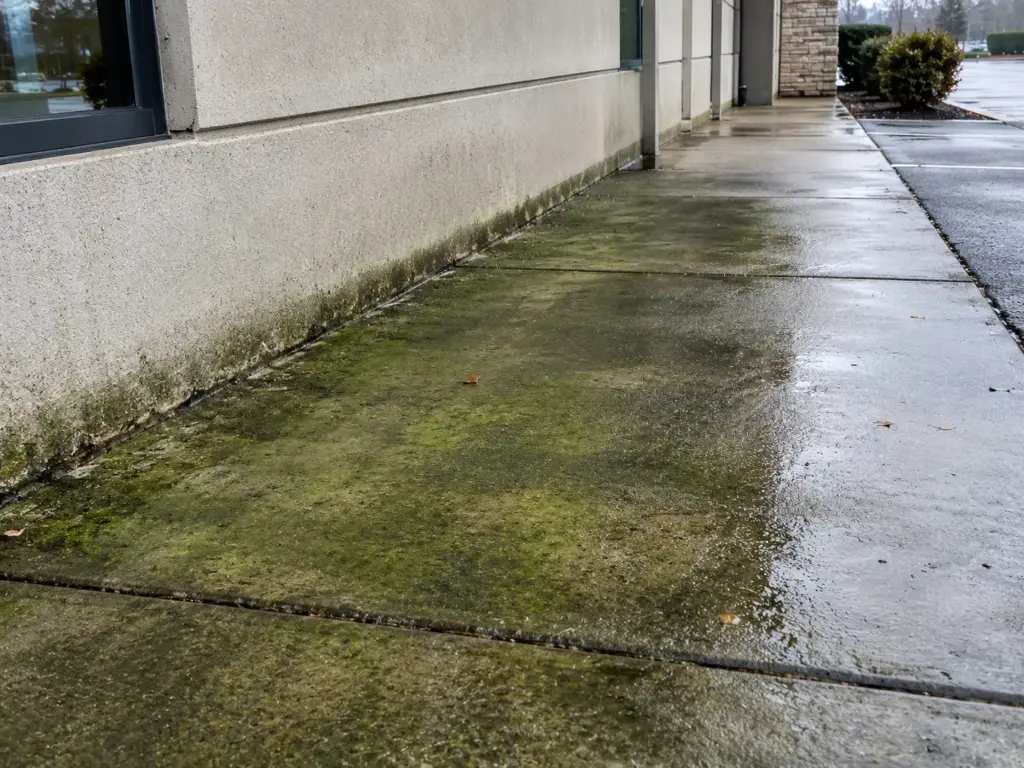
Algae and mold are the clearest example. On a shaded walkway, an entrance that stays damp, or a north-facing stretch of concrete, a biological film grows that gets dangerously slick when wet. It is slow, it is predictable, and it is the textbook version of a condition you should have known about. Grease is another, especially near food-service tenants, loading areas, and dumpster pads, where it spreads across the pavement and turns a service route into a hazard. Then there is water that has nowhere to go: clogged drainage and low spots that pool every time it rains, and the wet leaves that pile up through the fall and sit on top of them.
Clearing these is not cosmetic. Removing the algae, degreasing the pavement, and keeping walkways and drainage clear takes the hazard out before it becomes an incident. Routine concrete and walkway cleaning is one of the few liability controls that also happens to make the property look maintained. The same film that reads as neglect to a customer is the film that puts someone on the ground.
Winter is the sharp end of the problem
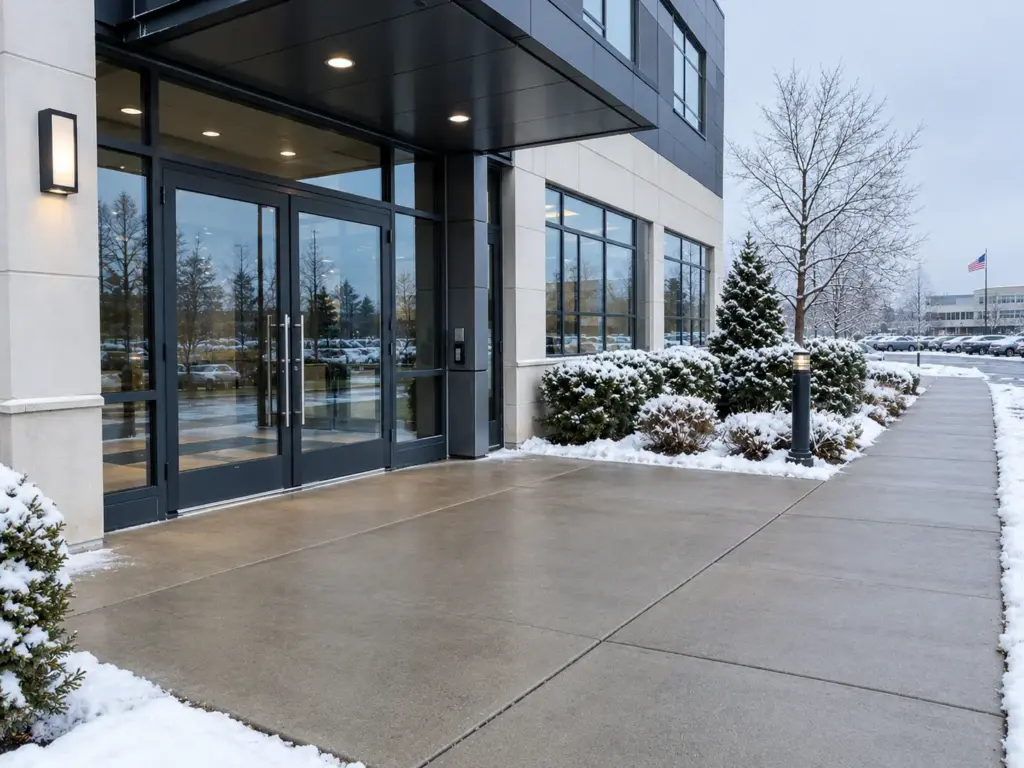
Nothing generates slip-and-fall claims on Long Island like ice. Snow and freeze-thaw cycles turn entrances, walkways, and parking areas into a liability every time the temperature crosses freezing, and the window between a storm and the morning rush is short.
New York businesses and landlords are expected to take reasonable steps to address snow and ice. Where that responsibility lands can depend on the location. In New York City, for example, local law generally puts the sidewalk in front of a commercial building on the owner. Elsewhere in the state, including much of Long Island, sidewalk responsibility depends on the municipality and the lease, so it is worth knowing exactly which surfaces are yours before someone falls on one.
Reacting to ice after it forms is always a step behind. Treating surfaces before a storm with an anti-icing brine application keeps ice from bonding to the pavement in the first place, which makes the later clearing faster and the walking surface safer during the hours a property is most exposed. On a commercial site, that head start is the difference between a managed surface and a claim.
Documentation is half the defense
Here is the part most property managers miss. Removing the hazard protects your visitors. Documenting that you removed it protects you.
A slip-and-fall claim in New York can be filed up to three years after the fall. By the time you are defending one, nobody remembers when that walkway was last cleaned. A maintenance record does. A consistent, logged schedule of cleaning, degreasing, and winter treatment does two things at once: it keeps the hazards from developing, and it becomes evidence that you acted reasonably rather than ignored a known problem. The absence of that record is what a plaintiff’s attorney uses to argue you should have known and did nothing.
This is the operational case for putting exterior maintenance on a schedule instead of a complaint-driven cycle. We covered the broader liability picture in our piece on commercial pressure washing and liability risk, and the throughline is the same: the surfaces you maintain on a plan are the ones you can defend.
How ADA accessibility claims are different, and where they overlap
This is where the two lawsuits get confused, so it is worth being precise.
An ADA claim is not about someone getting hurt. The Americans with Disabilities Act is a civil-rights law, and Title III is about access: whether a person with a disability can use your place of business the way everyone else can. These claims target barriers, things like non-compliant ramps, accessible parking and signage, entrances, service counters, and increasingly websites. No injury is required. Under the federal ADA, a private plaintiff can win injunctive relief and attorney’s fees but not money damages, though New York’s state and city human-rights laws can add damages on top of the same claim, which is part of why New York sees so many of these filings.
Cleaning does not make a property ADA compliant, and no honest vendor will tell you it does. Compliance is an architectural and legal question for an accessibility specialist and an attorney. There is one narrow place the two worlds touch: the ADA expects accessible features to be maintained in usable condition, so an accessible route blocked by debris, or a curb ramp left slick and hazardous, is a maintenance failure as well as a safety one. Keeping those paths clear and in good shape is part of good exterior upkeep. Making them compliant in the first place is not a cleaning job.
FAQ
Who is liable for a slip-and-fall on a commercial property in New York?
It depends on who controlled the area and whether they had notice of the hazard. Owners, property managers, and commercial tenants can all share responsibility. The case usually turns on whether the responsible party knew or should have known about the dangerous condition and failed to address it.
Does cleaning actually reduce slip-and-fall risk, or just improve appearance?
Both. Algae, grease, and standing water are genuine slip hazards, and removing them lowers the risk directly. Routine cleaning also creates a record that the property was maintained, which matters if a claim is ever filed.
Is a business responsible for the sidewalk in front of it in New York?
Often, yes, but it varies. In New York City, local law generally makes the commercial owner responsible for the abutting sidewalk. In other parts of the state, including Long Island, it depends on the municipality and the lease, so confirm which surfaces are yours.
Can maintenance records really help in a lawsuit?
They can. A documented, consistent cleaning and winter-treatment schedule supports the argument that you took reasonable care, which is the standard New York applies. Memories fade over a three-year claim window, but a log does not.
Does pressure washing make my property ADA compliant?
No. ADA compliance is about accessibility and physical barriers, which cleaning does not change. Maintenance can keep an accessible route clear and usable, but compliance itself is a matter for an accessibility specialist and legal counsel.
The takeaway
Slip-and-fall liability is one of the few risks on a commercial property where the prevention is cheap, routine, and completely in your control. The hazards that cost the most, algae on a walkway, grease on a service pad, ice at an entrance, are the ones a maintenance schedule clears before anyone falls, and the schedule itself becomes part of your defense if someone does. Waiting until a surface is obviously dangerous means you have already been accumulating notice.
If you manage commercial property on Long Island, the practical move before winter is to get your walkways, entrances, and high-traffic surfaces on a documented maintenance plan rather than a reactive one. The exposure you close this way is the kind that does not show up until it is expensive.